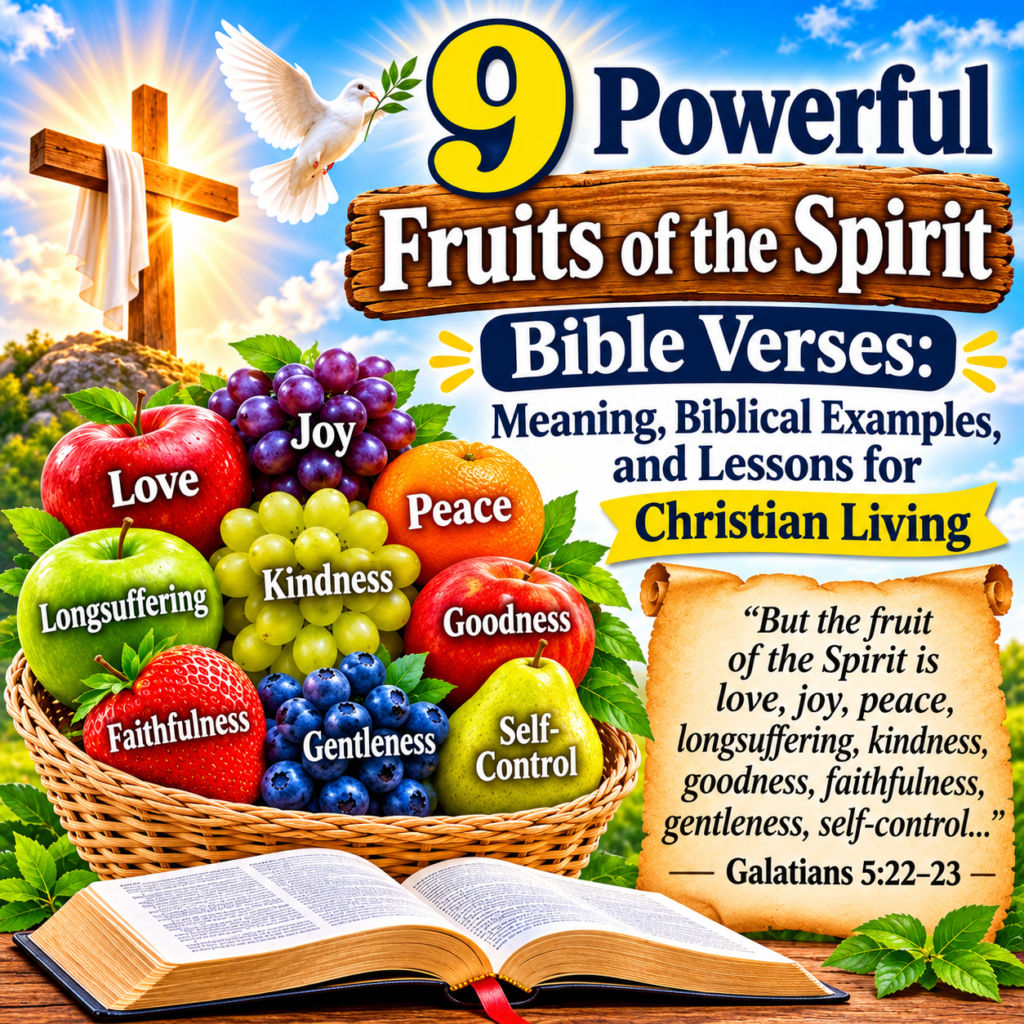
The fruits of the Spirit reveal what a life transformed by God looks like. They describe the qualities that develop in believers as they grow in their relationship with Jesus Christ. These qualities are not simply good manners or personality traits. They reflect the character of Christ working within a person’s heart.
In Galatians 5:22–23, the Apostle Paul identifies nine qualities that should become increasingly visible in the lives of Christians: love, joy, peace, patience, kindness, goodness, faithfulness, gentleness, and self-control.
Understanding the fruits of the Spirit Bible verses helps Christians recognize what spiritual growth looks like in everyday life. These teachings offer guidance for relationships, family life, personal decisions, difficult circumstances, and interactions with others.
This guide explores nine important fruits of the Spirit, their biblical meanings, supporting Scripture references, practical examples, and lessons Christians can apply to their daily lives.
What Are the Fruits of the Spirit in the Bible?
The fruits of the Spirit are nine spiritual qualities described in Galatians 5:22–23. They represent the character that develops when a person lives under the guidance and influence of the Holy Spirit.
Paul writes in Galatians 5:22–23 (KJV):
“But the fruit of the Spirit is love, joy, peace, longsuffering, gentleness, goodness, faith, meekness, temperance: against such there is no law.”
These nine qualities describe a Christian life shaped by God’s presence rather than controlled by selfish desires.
The word fruit is particularly meaningful. Fruit grows naturally from a healthy, living tree. In the same way, spiritual qualities develop as believers remain connected to God and allow the Holy Spirit to transform their thoughts, attitudes, and behavior.
The passage also contrasts the fruit of the Spirit with the works of the flesh described in Galatians 5:19–21.
This contrast teaches an important lesson: Christian transformation involves more than avoiding sinful actions. It also involves developing a character that reflects God’s goodness.
9 Fruits of the Spirit Bible Verses and Their Meanings
Each fruit represents a different aspect of Christian character. Together, they provide a practical picture of spiritual maturity.
1. Love – The Foundation of Christian Living
Bible Verse: Galatians 5:22; 1 Corinthians 13:4–7
Love is the first fruit mentioned in Paul’s list. It is also one of the most important teachings throughout the Bible.
Biblical love goes beyond romantic feelings, friendship, or emotional attachment. It involves choosing to care for others, showing compassion, forgiving people, and seeking their well-being.
First Corinthians 13:4–5 teaches that love is patient and kind. It does not envy, boast, or behave selfishly.
This kind of love is not always easy. It becomes particularly meaningful when someone experiences disappointment, disagreement, or unfair treatment.
Practical example:
Imagine a person who has been hurt by a close friend. Instead of responding with revenge or bitterness, that person chooses to communicate honestly, establish healthy boundaries, and avoid wishing harm on the other individual.
This does not mean accepting abuse or pretending that wrongdoing is acceptable. It means refusing to let hatred control the heart.
Important lesson: Genuine Christian love seeks what is good, even when relationships become difficult.
2. Joy – Finding Happiness Beyond Circumstances
Bible Verse: Galatians 5:22; Philippians 4:4
Joy is a deep sense of spiritual confidence and gladness rooted in God.
Unlike temporary happiness, which often depends on success, comfort, or favorable circumstances, biblical joy can remain present during difficult seasons.
Philippians 4:4 encourages believers to rejoice in the Lord always.
This teaching does not suggest that Christians must hide sadness or ignore personal struggles. Instead, it reminds them that difficult circumstances do not have the final authority over their hope.
Practical example:
A student who fails an important examination may feel disappointed. However, rather than allowing one setback to destroy confidence, the student continues praying, learning, and preparing for another opportunity.
The situation remains challenging, but faith provides a reason to keep moving forward.
Important lesson: Spiritual joy comes from trusting God, not from having a perfect life.
3. Peace – Trusting God During Difficult Times
Bible Verse: Galatians 5:22; Philippians 4:6–7
Peace is the ability to maintain inner calm and trust in God, even when life becomes uncertain.
The Bible frequently connects peace with prayer, faith, and dependence on God.
Philippians 4:6–7 encourages believers not to be overwhelmed by anxiety but to bring their concerns to God through prayer and thanksgiving.
This does not mean Christians never experience stress, fear, or emotional difficulties. It means they can seek God’s guidance instead of allowing worry to control every decision.
Practical example:
Consider someone facing financial uncertainty. Instead of making decisions entirely from fear, that person prays, creates a realistic plan, seeks wise advice, and takes responsible steps.
The challenges may not disappear immediately, but a growing sense of trust can bring emotional stability.
Important lesson: Peace grows when believers learn to surrender their worries to God while continuing to act responsibly.
4. Patience – Remaining Faithful During Difficult Situations
Bible Verse: Galatians 5:22; James 1:2–4
Patience, translated as longsuffering in the King James Version, involves enduring difficulties without becoming controlled by anger, frustration, or bitterness.
It also means giving others room to learn, improve, and grow.
James 1:3–4 explains that the testing of faith produces patience and that patience helps believers develop spiritual maturity.
Patience is particularly important in relationships because people have different personalities, experiences, and ways of communicating.
Practical example:
A parent teaching a child a new skill may need to explain the same instructions several times. Instead of responding with constant frustration, the parent chooses to remain calm and encouraging.
Similarly, a Christian may need patience while waiting for an opportunity, recovering from disappointment, or working toward a long-term goal.
Important lesson: Patience does not mean doing nothing. It means responding wisely while allowing time for growth.
5. Kindness – Treating Others With Compassion
Bible Verse: Galatians 5:22; Ephesians 4:32
Kindness is the willingness to treat others with compassion, respect, and consideration.
It often appears through small actions that may seem ordinary but can have a meaningful impact on someone’s life.
Ephesians 4:32 encourages Christians to be kind, tenderhearted, and forgiving toward one another.
Kindness is not limited to people who agree with or support someone. It also involves treating strangers, colleagues, neighbors, and difficult individuals with dignity.
Practical example:
A person notices a colleague struggling with a demanding task. Instead of criticizing or ignoring the situation, the person offers assistance.
Another example is listening carefully when someone is experiencing sadness rather than immediately judging or dismissing their feelings.
Important lesson: Kindness demonstrates God’s love through everyday actions.
6. Goodness – Choosing What Is Right
Bible Verse: Galatians 5:22; Ephesians 5:9
Goodness involves moral integrity, honesty, righteousness, and a sincere desire to do what pleases God.
It is more than appearing respectable in front of other people. True goodness continues even when nobody is watching.
Ephesians 5:9 connects the fruit of the Spirit with goodness, righteousness, and truth.
This quality influences personal decisions, professional responsibilities, friendships, and the way people use their influence.
Practical example:
An employee discovers that a colleague has accidentally received too much payment. Although keeping the extra money might be convenient, the employee chooses honesty and reports the mistake.
This decision demonstrates integrity because doing what is right matters more than personal advantage.
Important lesson: Goodness means choosing righteousness even when doing so requires personal sacrifice.
7. Faithfulness – Staying Committed to God
Bible Verse: Galatians 5:22; Proverbs 3:3–4
Faithfulness involves loyalty, dependability, trustworthiness, and commitment.
A faithful Christian seeks to remain devoted to God and dependable in relationships and responsibilities.
Faithfulness is not demonstrated only through public religious activities. It is also visible in private decisions, promises, responsibilities, and consistent actions.
Proverbs 3:3 encourages readers not to abandon mercy and truth but to keep them close to their hearts.
Practical example:
A person promises to help a family member during a difficult period. Even when the responsibility becomes inconvenient, the person makes a sincere effort to keep that commitment.
Faithfulness also involves continuing to pray, study Scripture, and trust God during seasons when spiritual motivation feels weak.
Important lesson: Faithfulness is demonstrated through consistent commitment, not occasional enthusiasm.
8. Gentleness – Responding With Humility and Grace
Bible Verse: Galatians 5:23; Colossians 3:12
Gentleness is a quality of humility, kindness, and controlled strength.
It does not mean weakness or an inability to defend personal beliefs. Rather, it means using strength and influence with wisdom instead of aggression.
Colossians 3:12 encourages believers to put on compassion, kindness, humility, meekness, and patience.
Gentleness becomes particularly important during disagreements because strong emotions can easily lead to hurtful words.
Practical example:
During a disagreement, one person may raise their voice or make personal accusations. A gentle response involves remaining respectful, listening carefully, and explaining a different perspective without insulting the other person.
Gentleness can also involve correcting someone privately rather than embarrassing them publicly.
Important lesson: A gentle person can stand firmly for the truth without treating others harshly.
9. Self-Control – Managing Desires and Reactions
Bible Verse: Galatians 5:23; 2 Timothy 1:7
Self-control is the ability to manage emotions, desires, habits, and reactions according to God’s wisdom.
It helps Christians resist temptation and make thoughtful decisions rather than acting impulsively.
Second Timothy 1:7 teaches that God has not given believers a spirit of fear but of power, love, and a sound mind.
Self-control affects many areas of life, including speech, spending, relationships, anger, entertainment, and personal habits.
Practical example:
Someone receives an insulting message and immediately feels the urge to respond with anger. Instead of sending a hurtful reply, the person pauses, considers the consequences, and chooses a respectful response.
This simple decision demonstrates emotional discipline.
Important lesson: Self-control allows believers to choose what is right instead of simply following temporary feelings.
Complete List of the 9 Fruits of the Spirit With Bible References
The following table provides a quick reference to all nine qualities and additional Scripture passages for personal study.
| Fruit of the Spirit | Main Bible Reference | Additional Scripture |
|---|---|---|
| Love | Galatians 5:22 | 1 Corinthians 13:4–7 |
| Joy | Galatians 5:22 | Philippians 4:4 |
| Peace | Galatians 5:22 | Philippians 4:6–7 |
| Patience | Galatians 5:22 | James 1:3–4 |
| Kindness | Galatians 5:22 | Ephesians 4:32 |
| Goodness | Galatians 5:22 | Ephesians 5:9 |
| Faithfulness | Galatians 5:22 | Proverbs 3:3–4 |
| Gentleness | Galatians 5:23 | Colossians 3:12 |
| Self-control | Galatians 5:23 | 2 Timothy 1:7 |
These fruits are interconnected. For example, love encourages kindness, patience supports peace, and self-control helps believers express gentleness during difficult conversations.
Together, they describe a life increasingly shaped by the Holy Spirit.
Other Powerful Bible Verses About the Fruits of the Spirit
Although Galatians 5:22–23 provides the primary list, several other passages explain how these qualities influence Christian living.
Here are additional Scriptures worth studying.
1. John 15:4–5 – Abiding in Christ
Jesus teaches that believers must remain connected to Him to produce spiritual fruit.
The illustration of the vine and branches explains that spiritual growth depends on a continuing relationship with Christ.
2. Matthew 7:16–20 – Recognizing People by Their Fruits
Jesus teaches that a tree is recognized by its fruit.
This passage encourages believers to examine the character and actions that develop from a person’s life rather than relying only on outward appearances.
3. Colossians 3:12–14 – Living With Christian Character
Paul encourages believers to demonstrate compassion, kindness, humility, gentleness, patience, forgiveness, and love.
These qualities closely reflect the character described in Galatians.
4. 2 Peter 1:5–8 – Growing in Spiritual Maturity
Peter encourages Christians to develop goodness, knowledge, self-control, patience, godliness, brotherly kindness, and love.
This passage demonstrates that spiritual growth involves intentional development and continued commitment.
5. Ephesians 5:8–10 – Walking in the Light
Paul encourages believers to live as children of light, producing goodness, righteousness, and truth.
It reminds Christians that their behavior should reflect their relationship with God.
How to Develop the Fruits of the Spirit in Everyday Life
Knowing the fruits of the Spirit Bible verses is valuable, but understanding how to practice them makes their message more meaningful.
Spiritual growth is a continuing process. It requires faith, prayer, obedience, self-examination, and a willingness to change.
Here are seven practical ways Christians can cultivate these qualities.
1. Spend Time Reading Scripture
Regular Bible study helps believers understand God’s character and recognize the attitudes they should develop.
Reading Galatians 5 alongside John 15 and Colossians 3 provides a strong foundation for understanding spiritual growth.
2. Develop a Consistent Prayer Life
Prayer creates opportunities to bring personal struggles, weaknesses, decisions, and desires before God.
Christians can specifically ask for help in becoming more patient, forgiving, loving, and disciplined.
3. Practice Forgiveness
Holding onto resentment can damage relationships and create emotional bitterness.
Forgiveness does not require ignoring wrongdoing or removing necessary boundaries. It involves choosing not to let resentment control the heart.
4. Control Words and Reactions
Words can strengthen relationships or cause lasting emotional damage.
Before responding during a disagreement, believers can pause and consider whether their words demonstrate kindness, patience, and gentleness.
5. Serve Other People
Helping others provides practical opportunities to demonstrate love and goodness.
Simple actions such as visiting someone who feels lonely, supporting a struggling neighbor, or helping a family member can reflect Christian character.
6. Build Healthy Spiritual Habits
Consistency matters.
Christians can establish routines for Bible reading, prayer, worship, reflection, and fellowship with other believers.
These habits help create an environment in which spiritual maturity can develop.
7. Examine Personal Growth Regularly
Self-examination helps believers recognize areas that need improvement.
At the end of each day, they can reflect on questions such as:
- Did I show kindness to others today?
- Did I respond patiently when something went wrong?
- Did I allow anger to control my words?
- Was I honest in my decisions?
- Did I demonstrate love through my actions?
The purpose is not to achieve perfection overnight. It is to recognize opportunities for growth and continue seeking God’s guidance.
Common Misconceptions About the Fruits of the Spirit
Several misunderstandings can prevent Christians from fully appreciating the message of Galatians 5.
Misconception 1: The Fruits of the Spirit Are Only Personality Traits
Some people assume that naturally kind, patient, or peaceful individuals automatically demonstrate spiritual maturity.
However, the biblical teaching goes deeper than personality.
The fruits of the Spirit describe qualities associated with the Holy Spirit’s transforming work in a believer’s life.
A naturally quiet person may still struggle with pride or resentment, while someone with a strong personality may demonstrate remarkable patience, compassion, and self-control.
Spiritual character is not determined simply by temperament.
Misconception 2: Christians Must Display All Nine Fruits Perfectly
Another misunderstanding is that believers should demonstrate every quality without making mistakes.
However, Christian growth is a process.
People experience weaknesses, disappointments, and moments of failure. The important response is to acknowledge mistakes, seek forgiveness, learn from Scripture, and continue growing.
The fruits of the Spirit are not a standard for pretending to be perfect. They are a picture of the character Christians should increasingly reflect.
Read more: 15 Powerful Fruits of the Flesh: Biblical Meaning, Examples, and How to Overcome Themhttps://numerologynamecheck.com/fruits-of-the-flesh/
Frequently Asked Questions About Fruits of the Spirit Bible Verses
1. What are the 9 fruits of the Spirit in the Bible?
The nine fruits are love, joy, peace, patience, kindness, goodness, faithfulness, gentleness, and self-control. They are listed in Galatians 5:22–23.
2. What is the main Bible verse about the fruits of the Spirit?
Galatians 5:22–23 is the primary passage. It identifies the nine qualities that develop in the lives of believers through the Holy Spirit.
3. Why are the fruits of the Spirit important for Christians?
They help believers understand what spiritual maturity looks like. These qualities influence relationships, personal decisions, emotional responses, and interactions with other people.
4. Are there 9 or 12 fruits of the Spirit?
Galatians 5:22–23 specifically identifies nine qualities. Some Christian traditions and devotional resources discuss additional virtues, but the standard biblical list in Galatians contains nine.
5. How can someone grow the fruits of the Spirit?
Christians can pursue spiritual growth through prayer, Bible study, obedience to God’s Word, fellowship, service, and daily opportunities to practice Christlike character.
6. What is the first fruit of the Spirit?
Love is the first quality mentioned in Galatians 5:22. It is foundational to Christian relationships and reflects the character of God.
7. What is the difference between the gifts and fruits of the Spirit?
Spiritual gifts are abilities given by the Holy Spirit for serving and strengthening the church. The fruits of the Spirit are qualities of Christian character that develop through the Spirit’s work in believers.
First Corinthians 12 discusses spiritual gifts, while Galatians 5:22–23 describes the fruit of the Spirit.
Conclusion: Let the Fruits of the Spirit Transform Everyday Life
The fruits of the Spirit are more than nine biblical words to memorize. They describe the character Christians are called to develop as they grow in their relationship with God.
Love teaches compassion. Joy provides hope. Peace encourages trust. Patience strengthens relationships. Kindness and goodness influence everyday actions. Faithfulness builds trust, gentleness promotes humility, and self-control helps believers make wise decisions.
Studying the fruits of the Spirit Bible verses provides a valuable foundation for understanding Christian character and spiritual maturity.
However, reading Scripture is only the beginning. The deeper challenge is allowing its teachings to influence daily thoughts, choices, conversations, and relationships.
A Christian does not need to demonstrate perfection to begin growing spiritually. Each day offers another opportunity to practice love, show kindness, forgive others, and trust God’s guidance.
A simple challenge: Choose one fruit of the Spirit to practice intentionally this week. Read its supporting Bible verses, pray about it, and look for one practical opportunity to demonstrate it each day.
Share this guide with someone who wants to understand biblical teachings and grow in their Christian faith.