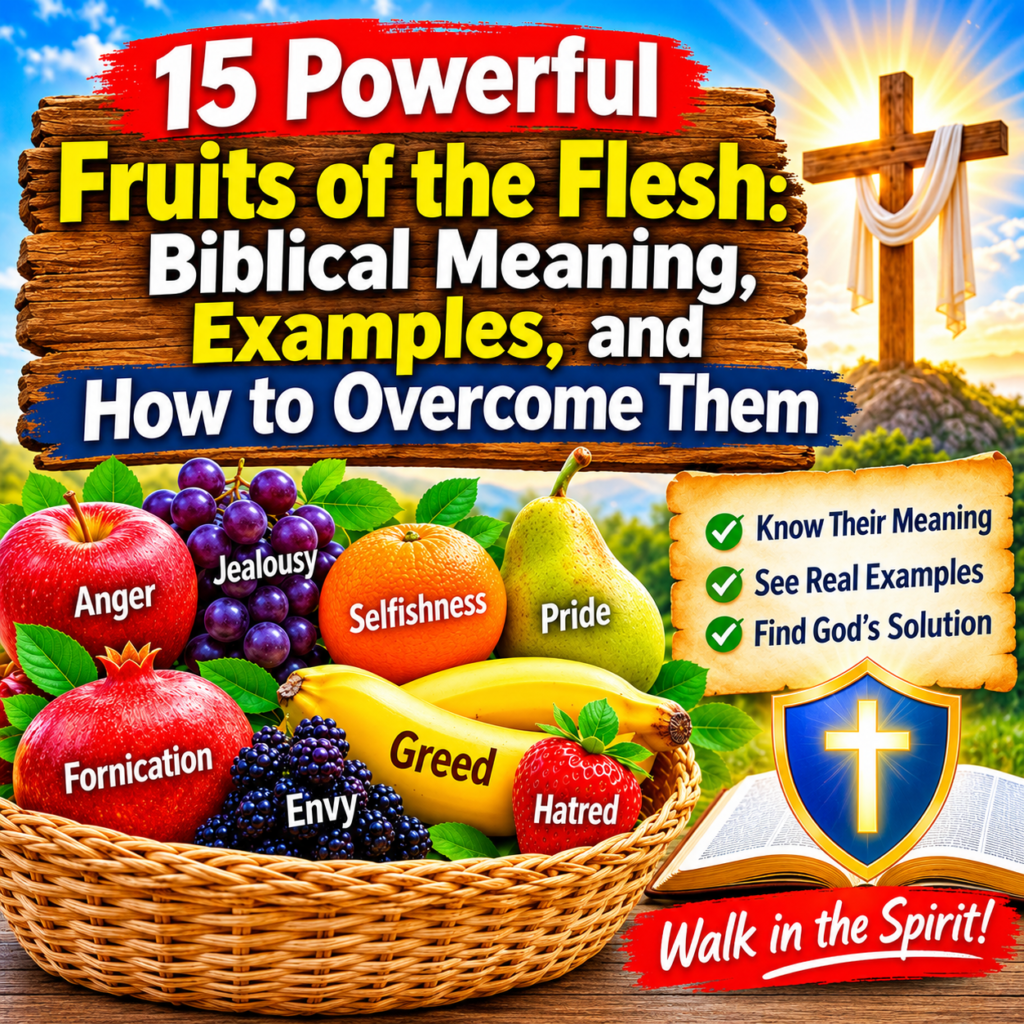
The human heart faces a daily struggle between following God’s direction and giving in to sinful desires. Sometimes, that struggle appears through anger, jealousy, selfishness, dishonesty, or uncontrolled behavior. These actions may seem ordinary in modern life, but the Bible explains that they can reveal a deeper spiritual problem.
In Galatians 5:19–21, the Apostle Paul describes the sinful behaviors that come from human nature apart from God’s guidance. These behaviors are commonly discussed under the topic of fruits of the flesh, although Scripture more precisely calls them the works of the flesh.
Understanding the fruits of the flesh is important for anyone who wants to grow spiritually, develop a stronger relationship with God, and live according to biblical principles.
This guide explores their biblical meaning, the behaviors Paul identifies, practical examples, and the spiritual steps Christians can take to overcome them. It also explains how the works of the flesh differ from the fruit of the Holy Spirit.
What Are the Fruits of the Flesh?
The fruits of the flesh refer to sinful attitudes, desires, and behaviors that emerge when people allow their natural human impulses to control their decisions instead of following God’s Word.
The expression is commonly used in Christian teaching to describe the sinful behaviors listed in Galatians 5:19–21. However, Paul actually uses the phrase “works of the flesh.”
The distinction is meaningful. The word works emphasizes actions and behaviors that result from living according to sinful desires.
In contrast, the fruit of the Spirit describes the character that develops when a person walks with the Holy Spirit.
The Apostle Paul explains that these two ways of living are in conflict with each other.
A person who consistently follows anger, jealousy, selfish ambition, or uncontrolled desires can damage relationships, weaken spiritual discipline, and move away from God’s teachings.
Understanding the fruits of the flesh does not mean judging other people. Instead, it encourages honest self-examination and spiritual growth.
What Does the Bible Say About the Works of the Flesh?
The primary biblical passage about the works of the flesh is Galatians 5:19–21.
Paul writes about the visible behaviors associated with sinful human nature. His list includes sexual immorality, impurity, debauchery, idolatry, witchcraft, hatred, discord, jealousy, fits of rage, selfish ambition, dissensions, factions, envy, drunkenness, and orgies.
These behaviors represent different ways people can allow sinful desires to influence their lives.
Paul also warns that those who practice such things will not inherit the kingdom of God.
This warning is serious, but its purpose is not to suggest that someone who has committed a sin can never receive forgiveness. The message encourages believers to turn away from persistent sinful behavior and pursue a life transformed by God.
The fruits of the flesh reveal what happens when human desires take priority over spiritual obedience.
15 Powerful Fruits of the Flesh Explained
Galatians 5:19–21 provides a biblical foundation for understanding the behaviors that oppose a Spirit-led life. The following explanations explore the major works Paul identifies and how they can appear in everyday situations.
1. Sexual Immorality
Sexual immorality refers to sexual behavior that goes against God’s design and biblical principles for sexuality.
The Bible teaches that sexuality should be approached with faithfulness, responsibility, purity, and respect.
In modern life, this struggle can involve unfaithfulness, sexual exploitation, and decisions driven entirely by uncontrolled physical desires.
Sexual immorality can damage trust, create emotional suffering, and affect families and relationships.
Biblical lesson: Christians are encouraged to honor God with their bodies and treat others with dignity rather than viewing people as objects of personal satisfaction.
2. Impurity
Impurity refers to thoughts, attitudes, desires, and actions that conflict with spiritual purity.
It is not limited to outward behavior. It can also involve the private intentions that influence how someone treats others.
For example, a person may appear kind in public but secretly encourage harmful fantasies, dishonesty, or degrading attitudes.
Impurity becomes spiritually dangerous when someone repeatedly chooses thoughts and actions that move them away from God’s standards.
Biblical lesson: Christians should pursue purity in their thoughts, intentions, relationships, and daily decisions.
3. Debauchery
Debauchery describes excessive and uncontrolled behavior, particularly behavior connected with immoral pleasure and a lack of self-restraint.
It involves living without meaningful boundaries or concern for the consequences of personal choices.
For example, someone may repeatedly participate in reckless activities because immediate pleasure matters more to them than personal responsibility.
Debauchery can also appear in lifestyles that celebrate excessive indulgence without considering moral or spiritual consequences.
Biblical lesson: A faithful Christian life requires self-control, responsibility, and respect for God’s guidance.
4. Idolatry
Idolatry means giving something or someone the place of importance that belongs to God.
In biblical times, idolatry often involved worshipping physical images or false gods.
Today, it can also involve allowing money, popularity, relationships, possessions, careers, or personal ambitions to become more important than faith.
For example, someone may become so obsessed with financial success that they neglect their family, abandon their values, and stop making time for God.
Not everything a person enjoys is an idol. The problem begins when something controls the heart and becomes more important than obedience to God.
Biblical lesson: God should remain the highest priority in a believer’s life.
5. Witchcraft
Witchcraft, translated from the Greek word pharmakeia in Galatians 5:20, refers to practices associated with sorcery and the use of spiritual powers apart from God.
The biblical warning concerns seeking supernatural control, guidance, or power through forbidden spiritual practices.
This subject should be understood within its biblical context rather than used to label people carelessly.
Christians are encouraged to seek wisdom, protection, and guidance through God instead of turning to practices that contradict their faith.
Biblical lesson: Spiritual trust should be placed in God rather than in attempts to control supernatural powers.
6. Hatred
Hatred involves deep hostility, resentment, or an unwillingness to show love toward another person.
It can develop after betrayal, conflict, disappointment, or long-term bitterness.
For example, someone who refuses to forgive another person may spend years thinking about revenge or hoping that the other person experiences suffering.
The problem is not simply experiencing painful emotions. The spiritual danger develops when hostility becomes a deliberate way of treating others.
Biblical lesson: Christians are called to practice forgiveness, compassion, and love, even when relationships are difficult.
7. Discord
Discord refers to conflict, hostility, and behavior that creates division between people.
It can appear through constant arguments, unnecessary criticism, gossip, and deliberate attempts to create disagreements.
For example, someone may spread private information about a friend to create tension within a social group.
Discord weakens relationships because it replaces understanding with suspicion and hostility.
Biblical lesson: Believers should become peacemakers who encourage honesty, patience, and respectful communication.
8. Jealousy
Jealousy develops when someone feels threatened, resentful, or unhappy because another person receives attention, success, recognition, or affection.
It can happen in friendships, families, workplaces, and churches.
For example, a person may become upset when a friend achieves an important goal instead of celebrating that achievement.
Healthy admiration can motivate personal improvement, but jealousy becomes destructive when it creates resentment or a desire to see others fail.
Biblical lesson: Christians should practice gratitude and learn to celebrate the blessings and achievements of others.
9. Fits of Rage
Fits of rage refer to uncontrolled anger that leads to harmful words, aggressive actions, or destructive reactions.
Everyone experiences anger at times. However, anger becomes dangerous when it controls behavior.
For example, someone may shout at family members, insult colleagues, or threaten another person whenever things do not happen according to their expectations.
Such reactions can create fear and emotional distance in relationships.
Biblical lesson: Believers should learn patience, emotional discipline, and peaceful ways of handling disagreements.
10. Selfish Ambition
Selfish ambition means pursuing personal success, recognition, or authority without considering the needs and well-being of others.
Ambition itself is not necessarily sinful. People can work hard, develop their abilities, and pursue meaningful goals while honoring God.
The problem begins when personal achievement becomes more important than honesty, kindness, and responsibility.
For example, someone may take credit for another person’s work to receive a promotion.
This behavior reveals a desire for recognition at the expense of integrity.
Biblical lesson: Success should never require dishonesty, exploitation, or the mistreatment of others.
11. Dissensions
Dissensions refer to serious disagreements and divisions that damage unity.
They can occur when people refuse to listen, insist on their own opinions, or allow personal disagreements to become ongoing conflicts.
For example, members of a church community may become divided because they refuse to discuss their differences with humility and respect.
Disagreement is not automatically sinful. Christians can have different opinions while remaining respectful.
The problem arises when disagreement turns into hostility and division.
Biblical lesson: Unity requires humility, patience, understanding, and a willingness to resolve conflicts peacefully.
12. Factions
Factions involve forming opposing groups that create division within a community.
This behavior can develop when people build alliances around personal interests, pride, or resentment.
For example, a group of people may intentionally exclude others or create competing groups to gain influence within a church or organization.
Factions weaken cooperation and make reconciliation more difficult.
Biblical lesson: Christians should encourage unity rather than creating groups that promote hostility and exclusion.
13. Envy
Envy is a feeling of resentment toward someone because of what they possess, achieve, or experience.
Although jealousy and envy are closely related, envy often focuses on wanting something another person has.
For example, a person may become unhappy when a neighbor buys a new home or when a colleague receives an important opportunity.
Social media can intensify this struggle by constantly exposing people to carefully selected images of other people’s achievements and lifestyles.
Envy makes people focus on what they lack instead of appreciating what they already have.
Biblical lesson: Gratitude helps believers overcome comparison and develop contentment.
14. Drunkenness
Drunkenness refers to excessive alcohol consumption that leads to impaired judgment and a loss of self-control.
The biblical warning emphasizes the dangers of allowing alcohol to control behavior.
Excessive drinking can affect decision-making, relationships, physical safety, and personal responsibilities.
It may also lead to other harmful behaviors, including arguments, irresponsible decisions, and neglect of family obligations.
Biblical lesson: Christians should exercise self-control and avoid allowing substances or habits to dominate their lives.
15. Orgies and Wild Parties
The final behavior in Paul’s list refers to excessive partying and uncontrolled celebrations associated with immoral conduct.
The original biblical context involves behavior characterized by indulgence, sexual immorality, and a lack of self-restraint.
It is important to understand that the Bible does not condemn every celebration or social gathering.
Enjoying a wedding, birthday, family event, or gathering with friends is not automatically sinful.
The concern is behavior that encourages excess, immorality, and the abandonment of spiritual responsibility.
Biblical lesson: Christians can enjoy life while maintaining moral boundaries and honoring God.
Fruits of the Flesh vs. Fruit of the Spirit
One of the most important lessons in Galatians 5 is the contrast between the works of the flesh and the fruit of the Spirit.
Paul explains that these represent two different ways of living.
The works of the flesh emerge when sinful desires control behavior. The fruit of the Spirit develops through a life guided by the Holy Spirit.
Galatians 5:22–23 identifies nine qualities of the fruit of the Spirit.
These include:
- Love: Showing genuine care and compassion toward others.
- Joy: Experiencing spiritual happiness rooted in God.
- Peace: Developing inner calm and promoting harmony.
- Patience: Remaining calm during difficulties and delays.
- Kindness: Treating others with consideration and compassion.
- Goodness: Choosing what is morally right and beneficial.
- Faithfulness: Remaining loyal, trustworthy, and committed.
- Gentleness: Responding with humility and consideration.
- Self-control: Managing desires, emotions, and behavior responsibly.
The difference can be understood through everyday situations.
A person controlled by jealousy may feel unhappy about a friend’s success. Someone developing the fruit of the Spirit can celebrate that achievement with genuine happiness.
A person controlled by anger may respond to criticism with insults. Someone growing spiritually can respond with patience and self-control.
The fruit of the Spirit provides a positive picture of the character Christians are encouraged to develop.
Why Are the Fruits of the Flesh Dangerous?
The works of the flesh are harmful because they affect more than individual spiritual development. They can influence families, friendships, communities, and society.
Several consequences deserve attention.
1. They Damage Relationships
Hatred, jealousy, anger, and selfish ambition can gradually destroy trust.
When people repeatedly act from these attitudes, healthy communication becomes difficult.
2. They Weaken Spiritual Growth
Sinful behavior can distract believers from prayer, Scripture, worship, and obedience to God.
Instead of developing spiritual maturity, they may become increasingly focused on temporary desires.
3. They Encourage Destructive Habits
Repeated actions can become established patterns.
For example, uncontrolled anger may develop into a regular response to frustration. Jealousy may become a habit of comparing personal achievements with others.
4. They Create Emotional and Social Conflict
Gossip, envy, and hostility can create unnecessary stress and division.
These behaviors may affect not only the person practicing them but also everyone around them.
5. They Move People Away From Biblical Values
The central problem is that these behaviors encourage people to prioritize selfish desires over love, humility, righteousness, and obedience to God.
Recognizing these consequences can help believers take spiritual growth more seriously.
How to Overcome the Fruits of the Flesh According to the Bible
Overcoming sinful behavior is not simply about trying harder. Christian teaching emphasizes repentance, faith, spiritual discipline, and dependence on the Holy Spirit.
The following practical steps can help believers develop a more Christ-centered lifestyle.
1. Study God’s Word Regularly
The Bible provides guidance for recognizing harmful attitudes and choosing better responses.
Reading Galatians 5 regularly can help believers understand the difference between sinful desires and Spirit-led behavior.
Other helpful passages include:
- Romans 12:1–2
- Ephesians 4:22–32
- Colossians 3:5–14
- James 1:19–20
Rather than reading quickly, believers can reflect on how each passage applies to their daily decisions.
2. Practice Honest Self-Examination
Spiritual growth begins with recognizing personal weaknesses.
A person can ask:
- Do they become jealous when others succeed?
- Do they struggle to control anger?
- Do they prioritize personal desires over their responsibilities?
- Do they create unnecessary conflict?
- Do they struggle to forgive?
These questions are not intended to create shame. They encourage honesty and provide opportunities for change.
3. Develop a Consistent Prayer Life
Prayer allows believers to seek God’s wisdom, forgiveness, strength, and guidance.
When someone struggles with anger, they can pray for patience. When jealousy becomes a problem, they can ask God to develop gratitude and contentment.
Prayer should be accompanied by sincere efforts to change harmful behavior.
4. Practice Repentance
Repentance involves more than feeling guilty after doing something wrong.
It means recognizing sin, turning away from it, seeking God’s forgiveness, and making a sincere effort to change.
For example, someone who has repeatedly hurt others through angry words should acknowledge the behavior, apologize where appropriate, and work toward responding differently.
5. Choose Healthy Relationships
The people around someone can influence their attitudes, decisions, and habits.
Spending time with people who encourage honesty, compassion, accountability, and spiritual growth can support positive change.
Christian fellowship can also provide encouragement during difficult periods.
6. Practice Self-Control Every Day
Self-control develops through repeated decisions.
A person who struggles with anger can practice pausing before responding. Someone who struggles with jealousy can deliberately express gratitude for another person’s achievements.
Small actions can gradually help establish healthier habits.
7. Walk in the Holy Spirit
Galatians 5:16 teaches believers to walk by the Spirit so they do not gratify the desires of the flesh.
This is central to Paul’s message.
Christian transformation is not merely an effort to avoid wrongdoing. It involves allowing the Holy Spirit to shape attitudes, priorities, relationships, and decisions.
Common Misunderstandings About the Fruits of the Flesh
Some biblical teachings are misunderstood when individual verses are separated from their larger context.
Here are two important misconceptions.
Misconception 1: Every Person Who Struggles With Sin Is Beyond Forgiveness
This is not the message of the gospel.
The Bible teaches that forgiveness is available through repentance and faith in Jesus Christ.
Christians are not expected to claim that they have never sinned. Instead, they are encouraged to acknowledge their weaknesses, seek forgiveness, and pursue spiritual transformation.
The important distinction is between struggling against sin and deliberately accepting a sinful lifestyle without repentance.
Misconception 2: Enjoying Life Is Automatically a Work of the Flesh
The Bible does not teach that happiness, celebrations, ambition, or ordinary pleasures are automatically sinful.
The problem is not enjoyment itself. It is allowing sinful desires to control behavior and lead to actions that contradict God’s teachings.
A Christian can enjoy friendships, celebrate achievements, pursue a career, and participate in social activities while maintaining biblical values.
Understanding this distinction prevents unnecessary guilt and encourages balanced spiritual living.
How to Identify the Works of the Flesh in Everyday Life
The fruits of the flesh are not always obvious. Sometimes, they appear through small decisions that gradually become harmful patterns.
Consider these examples:
| Everyday situation | Possible work of the flesh | Better biblical response |
|---|---|---|
| A friend receives an award | Jealousy or envy | Celebrate their achievement |
| Someone offers criticism | Fits of rage | Respond with patience |
| A disagreement develops | Discord | Communicate respectfully |
| Someone seeks personal recognition | Selfish ambition | Practice humility |
| A person spreads rumors | Discord or hatred | Speak truthfully and responsibly |
| Someone becomes obsessed with possessions | Idolatry | Practice gratitude and prioritize God |
These examples demonstrate how biblical principles can guide ordinary decisions.
The purpose of identifying these behaviors is not to label everyone else as sinful. It is to recognize personal weaknesses and make better choices.
Read more: Galatians 1: 7 Powerful Biblical Lessons About the True Gospel, Faith, and God’s Amazing Gracehttps://numerologynamecheck.com/galatians-1-biblical-lessons/
Frequently Asked Questions About the Fruits of the Flesh
1. How many fruits of the flesh are mentioned in the Bible?
Galatians 5:19–21 lists 15 commonly identified works of the flesh in many English translations. However, the exact count can vary depending on how closely related terms are grouped or separated.
The important point is the range of sinful attitudes and behaviors Paul describes.
2. Where are the fruits of the flesh found in the Bible?
The primary passage is Galatians 5:19–21.
The Apostle Paul explains how sinful human desires produce behaviors that oppose a Spirit-led life.
3. Are the fruits of the flesh the same as the sins of the flesh?
The expressions are closely related in Christian teaching. However, the biblical wording in Galatians is “works of the flesh.”
The passage describes sinful actions, attitudes, and behaviors that arise when people follow their sinful desires.
4. What is the opposite of the fruits of the flesh?
The opposite is represented by the fruit of the Holy Spirit in Galatians 5:22–23.
It includes love, joy, peace, patience, kindness, goodness, faithfulness, gentleness, and self-control.
5. Can Christians overcome the works of the flesh?
Yes. Christian teaching emphasizes that believers can experience spiritual transformation through repentance, faith, prayer, obedience to Scripture, and dependence on the Holy Spirit.
Growth may involve ongoing struggles, but believers are encouraged to continue pursuing a Christ-centered life.
6. Why does Paul warn against practicing the works of the flesh?
Paul warns against these behaviors because they oppose the character and values of God’s kingdom.
His message encourages believers to reject sinful patterns and live according to the Holy Spirit.
7. What is the difference between the flesh and the Holy Spirit?
In Galatians 5, the flesh represents sinful human desires that oppose God’s direction, while the Holy Spirit guides believers toward godly character and obedience.
Paul uses this contrast to explain the spiritual choices Christians face.
Practical Takeaways: Living Beyond the Works of the Flesh
Understanding the biblical meaning of the fruits of the flesh is only the beginning. The greater challenge is applying these teachings consistently.
A believer can begin with a few practical commitments:
- Examine personal attitudes and identify harmful patterns.
- Spend time reading and reflecting on Scripture.
- Pray for wisdom, patience, and spiritual strength.
- Avoid situations and habits that encourage sinful behavior.
- Practice forgiveness instead of holding onto bitterness.
- Celebrate other people’s achievements instead of comparing lives.
- Develop self-control when facing temptation.
- Seek support from mature and trustworthy Christian mentors.
- Make decisions that reflect love, humility, and integrity.
Spiritual growth does not happen through one decision alone. It develops through a continuing relationship with God and a willingness to follow His guidance.
Conclusion: Choose the Fruit of the Spirit Over the Works of the Flesh
The message of Galatians 5:19–21 provides an important warning about the consequences of allowing sinful desires to control human behavior.
The fruits of the flesh, commonly understood as the works of the flesh, include sexual immorality, impurity, idolatry, hatred, jealousy, anger, selfish ambition, envy, and other destructive behaviors.
These actions can damage relationships, weaken spiritual discipline, and move people away from biblical values.
However, Paul’s teaching does not end with a warning. Galatians 5:22–23 presents a beautiful alternative: the fruit of the Holy Spirit.
Through faith, repentance, prayer, Scripture, and spiritual discipline, Christians can pursue a life characterized by love, joy, peace, patience, kindness, goodness, faithfulness, gentleness, and self-control.
The central lesson is simple: spiritual maturity involves more than avoiding sinful actions. It means allowing God to transform the heart and influence everyday decisions.
A meaningful step toward spiritual growth begins when believers stop allowing the flesh to control their choices and start walking in the direction of the Holy Spirit.
Readers can begin by reflecting on Galatians 5 this week and identifying one attitude they want God to help them change. They can also share this guide with someone who wants to understand biblical teachings about spiritual growth.