The Christian life is not measured only by how often someone attends church, reads the Bible, or speaks about faith. It is also reflected in the way that person treats others, responds to difficulties, controls emotions, and makes everyday decisions.
This is where the fruits of the spirit become important. They describe the spiritual qualities that develop in a person’s life through the work of the Holy Spirit. These qualities influence relationships, strengthen faith, encourage forgiveness, and help believers live according to God’s teachings.
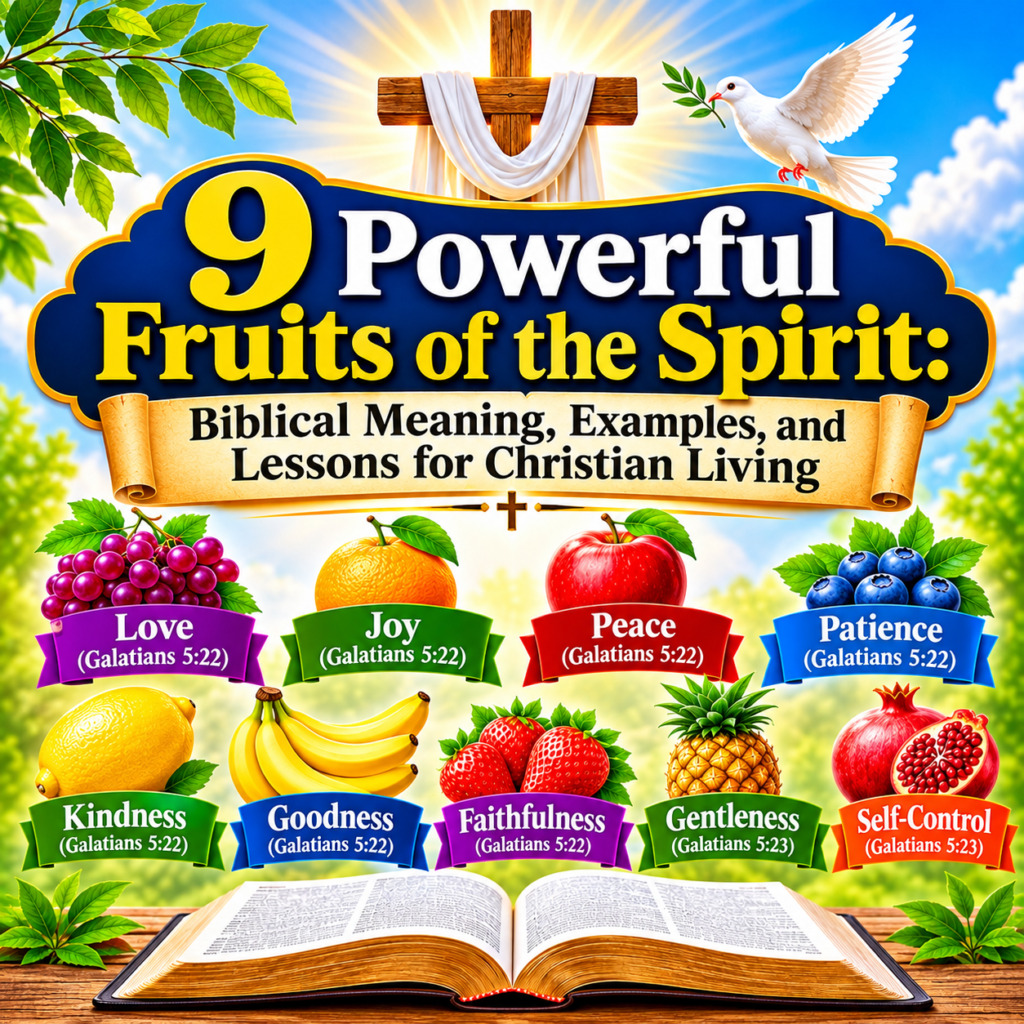
The Bible introduces these qualities in Galatians 5:22–23, where the Apostle Paul explains that the fruit of the Spirit includes love, joy, peace, patience, kindness, goodness, faithfulness, gentleness, and self-control.
These nine qualities are not simply rules for becoming a better person. They represent a transformed way of living that grows through a genuine relationship with God.
This guide explores the biblical meaning of each fruit, provides practical examples, explains common misunderstandings, and offers meaningful ways to develop these Christian virtues in everyday life.
What Are the Fruits of the Spirit?
The fruits of the spirit are nine Christian virtues described in Galatians 5:22–23. They are qualities that become increasingly visible in the lives of people who allow the Holy Spirit to guide their thoughts, attitudes, decisions, and behavior.
The Apostle Paul writes:
“But the fruit of the Spirit is love, joy, peace, longsuffering, gentleness, goodness, faith, meekness, temperance: against such there is no law.” — Galatians 5:22–23 (KJV).
In modern Bible translations, some of these words appear as patience, kindness, faithfulness, gentleness, and self-control.
An important detail is that Paul uses the singular word fruit, rather than fruits. This suggests that these nine qualities belong together as different expressions of one Spirit-led character.
For example, a person who demonstrates genuine love should also strive to show patience, kindness, and forgiveness. These qualities support one another rather than existing independently.
The fruits of the spirit also represent spiritual growth, not instant perfection. Christians may struggle with anger, impatience, fear, or selfishness, but their relationship with God encourages them to keep growing.
9 Fruits of the Spirit With Biblical Meanings and Examples
Each of the nine qualities reveals something important about Christian character. Understanding their meanings helps believers recognize how spiritual growth can influence ordinary situations.
1. Love: The Foundation of Christian Living
Love is the first quality mentioned in Galatians 5:22. It is also one of the most important teachings throughout the Bible.
Biblical love goes beyond feelings, attraction, or personal attachment. It involves genuine care, sacrifice, forgiveness, compassion, and a willingness to seek the well-being of others.
Jesus demonstrated this kind of love through His teachings, compassion, and sacrifice.
John 13:34–35 teaches believers to love one another as Jesus loved them. This command makes love a central characteristic of Christian discipleship.
Practical examples of love:
- Helping someone without expecting a reward.
- Forgiving a person who has caused emotional pain.
- Supporting family members during difficult circumstances.
- Showing compassion toward people who feel lonely or rejected.
- Treating others with dignity, regardless of their background.
For example, when someone makes a mistake, a loving Christian does not immediately humiliate or condemn that person. Instead, the individual responds with honesty, compassion, and an opportunity for improvement.
Love does not mean accepting every harmful behavior. It can also involve setting healthy boundaries while treating others with respect.
Biblical lesson: True Christian love is demonstrated through actions, not merely words.
2. Joy: Finding Happiness Beyond Circumstances
Joy is another important characteristic of a Spirit-led life. Unlike temporary happiness, which often depends on favorable circumstances, biblical joy comes from a deeper relationship with God.
A person may experience financial difficulties, disappointment, illness, or personal loss while still maintaining hope and trust in God.
James 1:2–3 encourages believers to consider trials an opportunity for spiritual growth because testing can develop perseverance.
This does not mean Christians must pretend to be happy when experiencing pain. Biblical joy allows people to acknowledge sadness while maintaining hope.
Practical examples of joy:
- Remaining thankful during challenging seasons.
- Celebrating another person’s success without jealousy.
- Finding encouragement through prayer and Scripture.
- Appreciating small blessings in everyday life.
- Maintaining hope when plans do not work out.
Consider someone who does not receive an expected promotion. Instead of allowing disappointment to control every decision, that person continues working faithfully, learning new skills, and trusting God’s guidance.
Biblical lesson: Lasting spiritual joy is not dependent on having a perfect life.
3. Peace: Trusting God During Difficult Times
Peace refers to inner calmness, confidence, and trust in God, even when life becomes uncertain.
The world often connects peace with financial security, successful relationships, or freedom from problems. However, biblical peace is deeper than the absence of difficulties.
Philippians 4:6–7 teaches believers to bring their concerns to God through prayer and thanksgiving. It also describes the peace of God as something that protects the heart and mind.
Peace influences how Christians respond to conflict, uncertainty, and stressful situations.
Practical examples of peace:
- Avoiding unnecessary arguments.
- Responding calmly instead of reacting with anger.
- Praying before making important decisions.
- Refusing to spread gossip or encourage conflict.
- Trusting God when the future feels uncertain.
For instance, when two family members disagree, a peaceful response involves listening carefully, communicating respectfully, and searching for a fair solution instead of trying to win an argument.
Peace does not require someone to ignore injustice or remain silent about harmful situations. It encourages thoughtful responses rather than destructive reactions.
Biblical lesson: God’s peace can strengthen the heart even when external circumstances remain difficult.
4. Patience: Learning to Wait Without Losing Faith
Patience, sometimes translated as longsuffering, means having the ability to endure difficulties, delays, and challenging relationships without responding with uncontrolled anger.
It is especially important in a world where people expect immediate results.
Spiritual maturity requires understanding that personal growth, answered prayers, restored relationships, and meaningful achievements often take time.
Romans 12:12 encourages believers to remain patient in tribulation and faithful in prayer.
Practical examples of patience:
- Listening carefully when someone explains a problem.
- Remaining calm when children make mistakes.
- Accepting that personal goals may take longer than expected.
- Giving others time to learn and improve.
- Avoiding angry reactions during stressful situations.
Imagine a parent teaching a child how to read. The child may repeatedly pronounce words incorrectly. A patient parent explains the lesson again rather than making the child feel embarrassed.
The same principle applies to friendships, workplaces, marriages, and church communities.
Biblical lesson: Patience demonstrates spiritual maturity by replacing uncontrolled reactions with understanding and endurance.
5. Kindness: Showing Compassion Through Actions
Kindness means treating people with consideration, generosity, and compassion.
It is more than being polite. Genuine kindness involves noticing the needs of others and responding with care.
The Bible repeatedly encourages believers to practice kindness because it reflects God’s character.
Ephesians 4:32 instructs Christians to be kind, compassionate, and forgiving toward one another.
Practical examples of kindness:
- Helping an elderly neighbor with daily responsibilities.
- Encouraging someone who feels discouraged.
- Speaking respectfully to people in difficult circumstances.
- Offering assistance without expecting recognition.
- Welcoming newcomers into a church community.
A simple act of kindness can have a meaningful effect. A supportive conversation may encourage someone who is struggling with loneliness or uncertainty.
Kindness is also important in online communication. Christians can demonstrate this quality by avoiding insulting comments, hateful language, and unnecessary arguments on social media.
Biblical lesson: Small acts of kindness can reflect God’s love in powerful ways.
6. Goodness: Choosing What Is Right
Goodness refers to moral integrity, righteousness, generosity, and a sincere desire to do what is right.
It involves more than avoiding wrongdoing. It also encourages believers to actively pursue what benefits others and honors God.
Psalm 34:14 encourages people to turn away from evil, do good, and pursue peace.
Goodness becomes visible through personal choices, especially when nobody is watching.
Practical examples of goodness:
- Telling the truth even when lying would be easier.
- Refusing to participate in dishonest activities.
- Helping vulnerable people.
- Treating employees and coworkers fairly.
- Standing against bullying and injustice.
For example, an employee may discover that a colleague has been unfairly blamed for a mistake. Choosing goodness means refusing to spread false information and supporting an honest investigation.
Goodness requires courage because doing what is right is not always the easiest option.
Biblical lesson: A good Christian character is revealed through integrity, honesty, and actions that reflect God’s principles.
7. Faithfulness: Remaining Loyal and Trustworthy
Faithfulness means being dependable, loyal, consistent, and committed to one’s responsibilities and relationship with God.
It involves maintaining trust even when circumstances become challenging.
Hebrews 10:23 encourages believers to hold firmly to their hope because God is faithful to His promises.
Faithfulness is not limited to religious activities. It also influences family relationships, friendships, work responsibilities, and personal commitments.
Practical examples of faithfulness:
- Keeping promises.
- Being honest in personal and professional relationships.
- Remaining committed to prayer and spiritual growth.
- Supporting family members during difficult seasons.
- Completing responsibilities even when motivation decreases.
For example, a faithful friend does not disappear whenever another person experiences hardship. Instead, that friend provides encouragement, practical support, and honest advice.
Faithfulness also involves consistency. A person should strive to practice Christian values privately, not only when others are watching.
Biblical lesson: Faithfulness builds trust and reflects a dependable Christian character.
8. Gentleness: Strength Under Control
Gentleness, sometimes translated as meekness, is often misunderstood as weakness.
However, biblical gentleness is not the absence of strength. It is the ability to use strength, knowledge, and influence with humility and consideration.
Jesus described Himself as gentle and humble in heart in Matthew 11:29.
His example demonstrates that gentleness can exist alongside courage, leadership, and authority.
Practical examples of gentleness:
- Correcting someone without humiliating them.
- Listening to different opinions respectfully.
- Speaking calmly during disagreements.
- Avoiding aggressive or threatening behavior.
- Helping someone who has made a mistake without judging them harshly.
For example, a teacher who notices a student’s poor performance can respond in two ways. One approach is to criticize the student publicly. Another is to discuss the problem privately and offer helpful guidance.
The second response demonstrates gentleness without ignoring the need for improvement.
Biblical lesson: True strength is demonstrated through humility, patience, and controlled behavior.
9. Self-Control: Mastering Thoughts, Words, and Actions
Self-control, also known as temperance, is the ability to manage desires, emotions, impulses, and behavior according to God’s principles.
It helps Christians avoid decisions that may damage their relationships, spiritual lives, or personal well-being.
Proverbs 25:28 compares a person without self-control to a city whose walls are broken down.
This powerful image illustrates why self-discipline matters.
Practical examples of self-control:
- Controlling anger during disagreements.
- Avoiding gossip and hurtful language.
- Managing excessive screen time.
- Resisting harmful temptations.
- Thinking carefully before making emotional decisions.
- Practicing discipline with money and daily responsibilities.
Imagine receiving an insulting message online. An immediate emotional response might involve sending an equally hurtful reply.
Self-control encourages the person to pause, consider the consequences, and choose a more constructive response.
It does not mean suppressing every emotion. Instead, it involves recognizing emotions without allowing them to control every action.
Biblical lesson: Self-control helps believers make wise decisions instead of becoming controlled by temporary desires or emotions.
What Is the Biblical Importance of the Fruits of the Spirit?
The fruits of the spirit are important because they demonstrate the difference between simply knowing Christian teachings and putting those teachings into practice.
A person may understand many Bible verses but still struggle with anger, pride, jealousy, or selfishness. Spiritual growth involves allowing biblical principles to influence everyday behavior.
There are several reasons these qualities matter.
They Reflect the Character of Jesus
Jesus demonstrated love, compassion, patience, humility, and faithfulness throughout His ministry.
Christians are encouraged to follow His example rather than simply adopting religious language.
They Strengthen Relationships
Healthy relationships require honesty, kindness, forgiveness, patience, and respect.
These spiritual qualities can help families communicate better, friendships become stronger, and communities develop greater understanding.
They Encourage Personal Transformation
Spiritual growth involves changes in attitudes, priorities, and behavior.
A person who previously reacted with anger may gradually learn to respond calmly. Someone who struggled with jealousy may begin celebrating other people’s achievements.
These changes reflect an ongoing process of transformation.
They Help Believers Resist Sinful Behavior
Galatians 5 contrasts the works of the flesh with the fruit of the Spirit.
Paul explains that believers should walk by the Spirit rather than allow sinful desires to control their lives.
The nine qualities provide a practical picture of what Spirit-led living looks like.
How to Develop the Fruits of the Spirit in Everyday Life
Spiritual maturity does not develop overnight. It requires faith, prayer, self-reflection, and a willingness to follow God’s teachings.
The following practices can help Christians strengthen these qualities.
1. Read the Bible Consistently
Regular Bible reading helps believers understand God’s character and develop a stronger foundation for their decisions.
Galatians 5 is an excellent starting point because it explains the contrast between the works of the flesh and the fruit of the Spirit.
2. Make Prayer Part of Daily Life
Prayer provides an opportunity to seek God’s guidance, express gratitude, and ask for help with personal struggles.
Believers can pray specifically for patience, forgiveness, kindness, or greater self-control.
3. Practice Gratitude
Gratitude encourages people to recognize blessings rather than focus entirely on what they lack.
Writing down three things to be thankful for each day can help develop a more positive and hopeful attitude.
4. Examine Personal Behavior
Self-reflection helps believers recognize areas that need improvement.
At the end of each day, they can consider questions such as:
- Did I treat people with kindness?
- Did I respond calmly when something went wrong?
- Did I keep my promises?
- Did I demonstrate patience with others?
- Did I allow anger or jealousy to influence my decisions?
Honest reflection creates opportunities for meaningful change.
5. Surround Yourself With Positive Christian Influences
Church communities, mature Christian mentors, and supportive friendships can encourage spiritual development.
Healthy relationships provide accountability and opportunities to practice forgiveness, compassion, and generosity.
6. Put Faith Into Action
Spiritual qualities become meaningful when they influence real decisions.
Believers can practice kindness by helping others, demonstrate faithfulness by keeping commitments, and show gentleness by responding respectfully during disagreements.
The goal is not to appear perfect but to become increasingly consistent in living according to Christian values.
Fruits of the Spirit vs. Works of the Flesh
Galatians 5:16–23 presents an important contrast between two ways of living.
The works of the flesh describe behaviors associated with sinful human desires, while the fruit of the Spirit describes qualities that reflect the Holy Spirit’s influence.
| Fruits of the Spirit | Works of the Flesh |
|---|---|
| Love | Hatred |
| Joy | Envy |
| Peace | Hostility |
| Patience | Outbursts of anger |
| Kindness | Selfishness |
| Goodness | Immorality |
| Faithfulness | Unfaithfulness |
| Gentleness | Harshness |
| Self-control | Lack of discipline |
This table provides simplified examples rather than a complete list of every behavior mentioned in Galatians 5.
The distinction is important because Christians are encouraged to examine their choices and recognize which attitudes influence their lives.
Common Misconceptions About the Fruits of the Spirit
Although these biblical qualities are widely discussed, some misunderstandings can prevent people from understanding their deeper meaning.
Misconception 1: Christians Must Demonstrate All Nine Qualities Perfectly
Nobody becomes spiritually mature in a single day.
Believers may demonstrate patience in one situation but struggle with anger in another. This does not mean spiritual growth is impossible.
The important thing is continued dependence on God, sincere repentance, and a willingness to improve.
Misconception 2: Gentleness and Patience Mean Accepting Mistreatment
Gentleness does not mean allowing people to abuse, manipulate, or disrespect others.
Likewise, patience does not require someone to remain in an unsafe or harmful situation.
Christians can establish appropriate boundaries while continuing to demonstrate compassion and respect.
Misconception 3: Good Behavior Alone Produces Spiritual Fruit
The fruit of the Spirit is not simply a collection of good habits.
Galatians 5 connects these qualities with the work of the Holy Spirit. Prayer, obedience, faith, and an ongoing relationship with God are central to Christian spiritual growth.
A Simple 9-Day Fruits of the Spirit Challenge
One practical way to understand these biblical teachings is to focus on one quality each day.
This nine-day challenge encourages believers to turn spiritual understanding into everyday action.
| Day | Spiritual Quality | Daily Practice |
|---|---|---|
| Day 1 | Love | Perform an act of kindness without expecting anything in return. |
| Day 2 | Joy | Write down five things to be thankful for. |
| Day 3 | Peace | Spend time in prayer instead of reacting emotionally. |
| Day 4 | Patience | Listen carefully before responding during disagreements. |
| Day 5 | Kindness | Encourage someone who is experiencing difficulty. |
| Day 6 | Goodness | Make an honest and ethical choice, even when difficult. |
| Day 7 | Faithfulness | Complete an important promise or responsibility. |
| Day 8 | Gentleness | Correct or guide someone with respect. |
| Day 9 | Self-Control | Avoid one harmful habit or unnecessary emotional reaction. |
After completing the challenge, believers can reflect on which qualities feel natural and which require more attention.
The exercise can also be repeated whenever someone wants to strengthen their spiritual habits.
Read more: 9 Powerful Fruits of the Spirit Bible Verses: Meaning, Biblical Examples, and Lessons for Christian Livinghttps://numerologynamecheck.com/fruits-of-the-spirit-bible-verses/
Frequently Asked Questions About the Fruits of the Spirit
1. What Are the 9 Fruits of the Spirit?
The nine qualities are love, joy, peace, patience, kindness, goodness, faithfulness, gentleness, and self-control.
They are described in Galatians 5:22–23 and represent qualities associated with the Holy Spirit’s influence in Christian living.
2. Where Are the Fruits of the Spirit Found in the Bible?
They are found in Galatians 5:22–23 in the New Testament.
The Apostle Paul explains that the fruit of the Spirit includes nine important qualities that distinguish Spirit-led living from sinful behavior.
3. Why Does the Bible Say Fruit Instead of Fruits?
Paul uses the singular word fruit to describe one unified spiritual result expressed through nine qualities.
This highlights how love, joy, peace, patience, kindness, goodness, faithfulness, gentleness, and self-control belong together.
4. Which Fruit of the Spirit Is the Most Important?
Love is often understood as foundational because it influences how the other qualities are expressed.
First Corinthians 13:13 identifies love as greater than faith and hope in the context of enduring Christian virtues.
However, all nine qualities are important aspects of Spirit-led character.
5. How Can Someone Receive the Fruits of the Spirit?
Christians believe spiritual fruit develops through a relationship with God, faith in Jesus Christ, the guidance of the Holy Spirit, prayer, obedience, and engagement with Scripture.
These qualities develop progressively as believers grow spiritually.
6. Can Someone Have More Than One Fruit of the Spirit?
Yes. The nine qualities are interconnected expressions of one spiritual fruit.
A believer can demonstrate love, patience, kindness, and self-control in the same situation.
7. What Is the Difference Between Spiritual Gifts and Spiritual Fruit?
Spiritual gifts are abilities given by the Holy Spirit to serve and strengthen the Christian community.
Spiritual fruit refers to qualities of character that develop through the Holy Spirit’s work.
For example, teaching and healing are discussed as spiritual gifts in 1 Corinthians 12, while love, joy, and peace are described in Galatians 5:22–23.
Conclusion: Let the Fruits of the Spirit Transform Everyday Life
The nine biblical qualities provide a meaningful picture of Christian spiritual maturity. Love, joy, peace, patience, kindness, goodness, faithfulness, gentleness, and self-control influence how believers think, communicate, make decisions, and treat other people.
The fruits of the spirit are not simply qualities to memorize or religious words to repeat. They are characteristics that Christians are encouraged to develop through a growing relationship with God.
Spiritual transformation happens through everyday choices: forgiving someone, controlling anger, showing compassion, remaining faithful, and choosing kindness when circumstances become difficult.
Nobody needs to demonstrate perfect behavior to begin growing spiritually. What matters is a sincere willingness to follow God’s guidance and allow the Holy Spirit to shape daily life.
A practical next step: Choose one of the nine qualities to focus on this week. Read its related Bible verse, pray for guidance, and find one meaningful way to demonstrate it in everyday life.
Share this guide with someone who wants to understand biblical teachings and grow stronger in Christian faith.