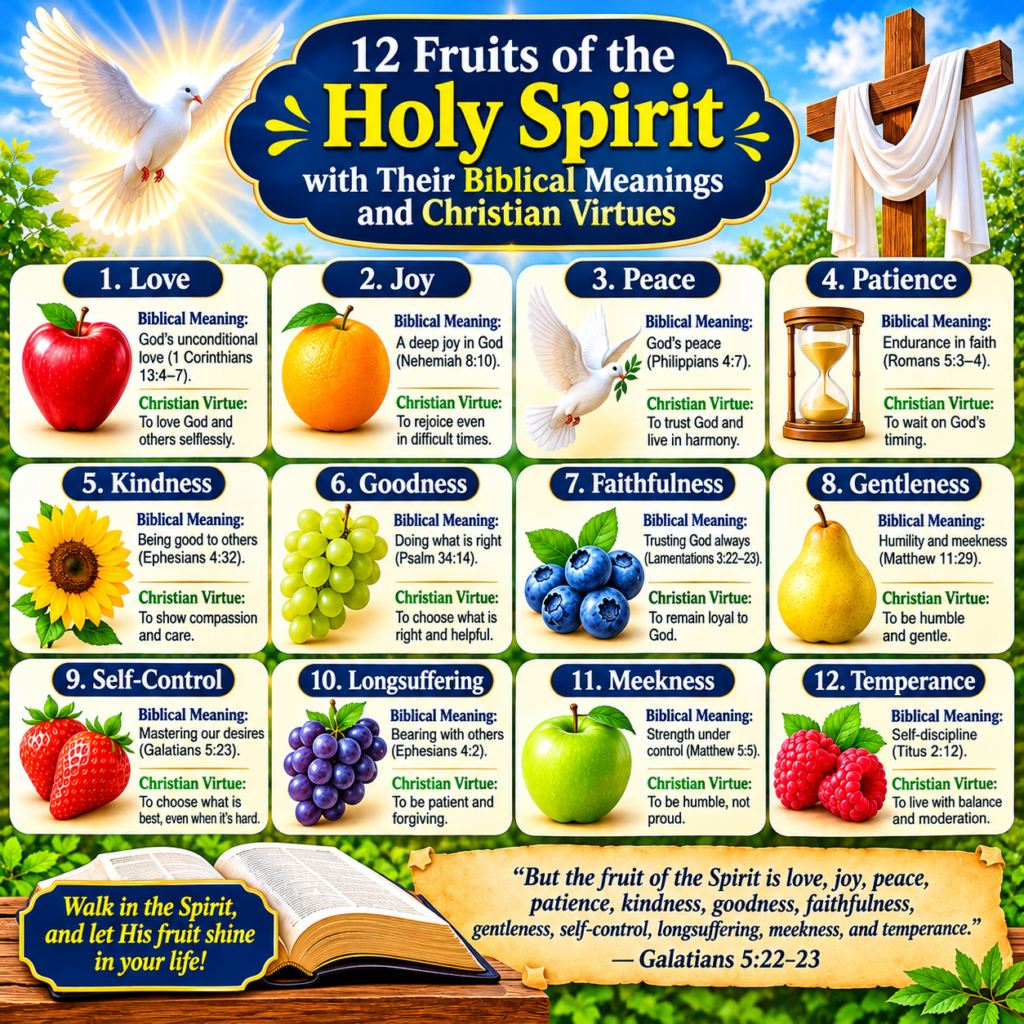
The fruits of the Holy Spirit represent the beautiful qualities that develop in a person’s life through God’s presence and guidance. They reflect a transformation that goes beyond outward religious practices. They influence how people think, speak, treat others, respond to difficulties, and build relationships.
But what exactly are the 12 fruits of the Holy Spirit, and how can someone recognize them in everyday life?
In Christian teaching, these twelve fruits describe virtues that help believers grow spiritually and reflect the character of Christ. They include love, joy, peace, patience, kindness, goodness, generosity, gentleness, faithfulness, modesty, self-control, and chastity.
These qualities are not simply rules to follow. They are signs of spiritual growth that become visible through everyday choices.
This guide explores the biblical foundation, meaning, practical examples, and importance of each fruit. It also explains how believers can cultivate these qualities and allow the Holy Spirit to shape their daily lives.
What Are the 12 Fruits of the Holy Spirit?
The 12 fruits of the Holy Spirit are spiritual qualities that develop in Christians as they grow in faith and become more responsive to God’s guidance.
According to the Catechism of the Catholic Church, paragraph 1832, the twelve fruits are:
- Charity (Love)
- Joy
- Peace
- Patience
- Kindness
- Goodness
- Generosity
- Gentleness
- Faithfulness
- Modesty
- Self-Control
- Chastity
The Church describes these fruits as perfections formed in believers through the Holy Spirit. They become visible through actions, attitudes, decisions, and relationships. Vatican+1
Why Are They Called Fruits?
The word fruit represents the results of spiritual growth.
Just as a healthy tree produces fruit when it receives the right nourishment, a Christian develops spiritual qualities through faith, prayer, obedience, and a growing relationship with God.
These qualities are not developed simply by trying to appear religious. They reflect an inner transformation that gradually influences outward behavior.
Biblical Foundation of the 12 Fruits of the Holy Spirit
The primary biblical foundation comes from Galatians 5:22–23, where the Apostle Paul describes the fruit produced by the Spirit.
In many modern English Bible translations, the passage identifies nine qualities:
- Love
- Joy
- Peace
- Patience
- Kindness
- Goodness
- Faithfulness
- Gentleness
- Self-control
Paul contrasts these qualities with the works of the flesh and encourages believers to live according to the Spirit rather than selfish desires. classic.net.bible.org+1
However, the Catholic tradition identifies twelve fruits. This traditional list includes generosity, modesty, and chastity as additional distinctions.
This difference is important because readers may encounter either nine or twelve fruits when studying Christian teachings. Both lists are connected to the same biblical passage, but the twelve-fruit list follows the Church’s traditional interpretation associated with Galatians 5:22–23 in the Latin Vulgate. Vatican+1
1. Charity (Love): The Foundation of Christian Living
Charity is the first and perhaps most important of the 12 fruits of the Holy Spirit. It represents selfless love that seeks the well-being of others without expecting something in return.
Christian charity goes beyond affection or emotional attachment. It involves compassion, forgiveness, sacrifice, and a genuine desire to help others.
Biblical meaning: First Corinthians 13:4–7 describes love as patient, kind, humble, and enduring.
Practical examples:
- Helping someone who cannot repay the favor.
- Forgiving a person who has caused emotional pain.
- Showing compassion toward people who are struggling.
- Treating strangers with dignity and respect.
For example, someone who supports a struggling friend without judging their circumstances demonstrates charity through action.
2. Joy: Finding Happiness Beyond Circumstances
Joy is a deep spiritual happiness that comes from trusting God. Unlike temporary excitement, Christian joy does not depend entirely on money, achievements, relationships, or comfortable circumstances.
A person may experience difficulties and still maintain hope because their confidence rests in God’s goodness.
Biblical meaning: Nehemiah 8:10 reminds believers that the joy of the Lord is their strength.
Practical examples:
- Remaining hopeful during difficult situations.
- Appreciating everyday blessings.
- Celebrating another person’s success without jealousy.
- Maintaining gratitude when life does not go according to plan.
Joy encourages Christians to recognize that difficult seasons do not have to destroy their hope.
Peace is the spiritual ability to remain grounded and trust God even when life becomes stressful or uncertain.
It does not mean that problems disappear or that believers never experience anxiety. Instead, it reflects confidence in God’s presence during challenging circumstances.
Biblical meaning: Philippians 4:6–7 encourages Christians to bring their concerns to God through prayer and thanksgiving.
Practical examples:
- Avoiding unnecessary arguments.
- Responding thoughtfully instead of reacting angrily.
- Praying during stressful moments.
- Working toward reconciliation after disagreements.
A peaceful person does not need to win every argument. Sometimes choosing understanding over conflict demonstrates greater spiritual maturity.
Patience is the ability to endure difficulties, delays, and frustrating situations without becoming bitter or losing control.
It also involves showing understanding when other people make mistakes.
Patience is especially important because personal growth, answered prayers, and meaningful relationships often require time.
Biblical meaning: Colossians 3:12 encourages believers to put on patience alongside compassion, kindness, humility, and gentleness.
Practical examples:
- Listening carefully when someone struggles to explain themselves.
- Remaining calm when plans are delayed.
- Supporting children as they learn new skills.
- Avoiding harsh words during disagreements.
Patience does not mean accepting injustice or remaining silent when something harmful happens. It means responding with wisdom rather than uncontrolled anger.
Kindness means treating others with consideration, compassion, and respect.
It is one of the most visible 12 fruits of the Holy Spirit because it can be demonstrated through simple everyday actions.
A kind person understands that even small gestures can make a meaningful difference in someone’s life.
Biblical meaning: Ephesians 4:32 encourages Christians to be kind, compassionate, and forgiving toward one another.
Practical examples:
- Helping an elderly neighbor.
- Speaking respectfully to service workers.
- Comforting someone who feels lonely.
- Offering encouragement instead of criticism.
Kindness is not limited to close friends or family members. It also includes people with different backgrounds, opinions, and experiences.
Goodness involves a sincere commitment to doing what is morally right.
While kindness focuses on compassionate treatment, goodness also includes integrity, honesty, fairness, and responsible decisions.
A person who demonstrates goodness tries to make choices that reflect Christian values, even when nobody is watching.
Biblical meaning: Romans 12:21 teaches believers not to be overcome by evil but to overcome evil with good.
Practical examples:
- Telling the truth even when lying would be easier.
- Refusing to participate in dishonest activities.
- Standing up for someone being treated unfairly.
- Making responsible decisions that protect others.
Goodness reminds Christians that faith should influence private decisions as much as public behavior.
Generosity is the willingness to share resources, time, knowledge, and attention with others.
It is not measured only by how much money someone gives. A person with limited financial resources can still demonstrate remarkable generosity through service and compassion.
Biblical meaning: Second Corinthians 9:7 teaches that giving should come willingly and cheerfully rather than reluctantly or under compulsion.
Practical examples:
- Donating food or clothing to families in need.
- Helping a student understand a difficult subject.
- Giving time to community service.
- Sharing professional knowledge without expecting payment.
True generosity comes from a sincere desire to make life better for others.
Gentleness is the ability to exercise strength, authority, and confidence without becoming harsh or aggressive.
It does not mean being weak or allowing others to take advantage of someone. Instead, it involves choosing a respectful approach even when disagreement is unavoidable.
Biblical meaning: Galatians 6:1 encourages believers to restore someone who has made a mistake with a spirit of gentleness.
Practical examples:
- Correcting someone without humiliating them.
- Listening before making judgments.
- Speaking calmly during disagreements.
- Treating vulnerable people with sensitivity.
Gentleness helps build trust because people feel respected rather than threatened.
Faithfulness means remaining committed to God, fulfilling responsibilities, and being dependable in relationships.
It involves consistency between beliefs, promises, and actions.
A faithful person does not abandon important commitments simply because circumstances become inconvenient.
Biblical meaning: Proverbs 3:3 encourages believers to keep love and faithfulness close to their hearts.
Practical examples:
- Keeping promises.
- Being honest in personal and professional relationships.
- Remaining committed to prayer and spiritual growth.
- Supporting family members through difficult seasons.
Faithfulness creates stability and trust. It reminds Christians that meaningful commitment is demonstrated through consistent actions.
Modesty involves humility, moderation, and respect for oneself and others.
It encourages people not to make excessive displays of wealth, appearance, status, or personal achievements.
In Christian teaching, modesty is broader than clothing. It also concerns attitudes, speech, behavior, and the way someone presents themselves to the world.
Biblical meaning: First Timothy 2:9–10 discusses modesty and the importance of good works rather than outward display.
Practical examples:
- Avoiding constant boasting about achievements.
- Treating people equally regardless of social position.
- Choosing respectful language.
- Appreciating personal abilities without looking down on others.
Modesty helps individuals develop confidence without arrogance.
Self-control is the ability to manage emotions, desires, habits, and impulses in a responsible way.
It helps believers make thoughtful decisions instead of acting immediately on anger, temptation, or frustration.
This fruit is particularly important in a world where distractions and instant gratification can make discipline difficult.
Biblical meaning: Proverbs 25:28 compares a person without self-control to a city whose walls are broken down.
Practical examples:
- Controlling anger during arguments.
- Avoiding harmful habits.
- Managing time responsibly.
- Thinking carefully before speaking.
- Practicing discipline in personal decisions.
Self-control does not require perfection. It involves recognizing weaknesses and making consistent efforts to respond wisely.
12. Chastity: Respecting the Gift of Human Sexuality
Chastity is the virtue of integrating sexuality with love, dignity, responsibility, and respect for oneself and others.
In Christian teaching, it encourages people to live according to their faith and moral commitments.
Chastity is not simply about avoiding certain behaviors. It also concerns the intentions, attitudes, and respect that guide relationships.
Biblical meaning: First Thessalonians 4:3–5 teaches believers to pursue holiness and avoid sexual immorality.
Practical examples:
- Respecting personal and relationship boundaries.
- Treating others as people with dignity rather than objects.
- Practicing honesty and responsibility in relationships.
- Making choices consistent with one’s Christian convictions.
Chastity encourages believers to recognize the value of their bodies and the importance of respectful relationships.
Difference Between the 12 Fruits and 7 Gifts of the Holy Spirit
Many Christians confuse the fruits of the Holy Spirit with the seven gifts. Although both are associated with spiritual growth, they have different meanings.
The seven gifts are spiritual dispositions that help believers respond to God’s guidance. The twelve fruits are qualities that become visible in their lives.
According to the Catechism of the Catholic Church, paragraph 1831, the seven gifts are wisdom, understanding, counsel, fortitude, knowledge, piety, and fear of the Lord. Vatican+1
Setting the world on fire: life in the Holy Spirit | The Catholic Weekly
| Seven Gifts | Twelve Fruits |
|---|---|
| Wisdom | Charity |
| Understanding | Joy |
| Counsel | Peace |
| Fortitude | Patience |
| Knowledge | Kindness |
| Piety | Goodness |
| Fear of the Lord | Generosity |
| — | Gentleness |
| — | Faithfulness |
| — | Modesty |
| — | Self-control |
| — | Chastity |
The gifts help believers receive and respond to divine inspiration, while the fruits describe the spiritual qualities formed through that relationship.
Both are important in Christian life because they encourage a deeper relationship with God and a more Christ-centered way of living.
How to Develop the 12 Fruits of the Holy Spirit in Everyday Life
Spiritual growth does not usually happen overnight. It develops through prayer, reflection, learning, and repeated decisions to follow Christian values.
The following practices can help believers cultivate the 12 fruits of the Holy Spirit in their daily routines.
1. Make Prayer a Daily Habit
Prayer creates an opportunity to communicate with God, express gratitude, seek forgiveness, and ask for guidance.
Even a few minutes of sincere prayer each day can help someone become more aware of their attitudes and decisions.
2. Read and Reflect on Scripture
Reading the Bible provides guidance for developing Christian character.
Passages such as Galatians 5:16–26, 1 Corinthians 13, Colossians 3:12–17, and Philippians 4:4–9 offer valuable lessons about spiritual growth.
Rather than simply reading quickly, believers can consider how each passage applies to their relationships and everyday responsibilities.
3. Practice Kindness in Small Ways
Spiritual qualities become meaningful when they influence real behavior.
A person can practice kindness by helping a neighbor, listening to a friend, encouraging a struggling family member, or treating someone respectfully during a disagreement.
Small actions can gradually become consistent habits.
4. Learn to Manage Emotions
Anger, jealousy, impatience, and frustration are ordinary human experiences.
However, Christians can learn to recognize these emotions without allowing them to control their decisions.
Taking a moment to pause, pray, and consider the consequences of an action can help develop patience, gentleness, and self-control.
5. Forgive and Seek Reconciliation
Forgiveness is an important expression of Christian love.
It does not mean pretending that harmful behavior is acceptable or removing necessary boundaries. Instead, it means choosing not to let resentment control one’s heart.
When possible, honest communication and reconciliation can help restore relationships.
6. Serve Others Without Expecting Rewards
Helping people without seeking recognition is a practical way to develop charity and generosity.
Volunteering, supporting someone in need, sharing knowledge, and giving emotional encouragement are meaningful expressions of Christian service.
7. Examine Personal Growth Regularly
At the end of each day, believers can reflect on questions such as:
- Did I show kindness to others today?
- Was I patient when something went wrong?
- Did I respond to anger with gentleness?
- Was I honest and faithful in my responsibilities?
- Did my actions reflect my Christian beliefs?
This reflection helps identify areas that need attention and encourages steady spiritual improvement.
Real-Life Examples of the Fruits of the Holy Spirit
The 12 fruits of the Holy Spirit are not limited to church services, religious ceremonies, or moments of prayer. They can be demonstrated in ordinary situations.
Consider these examples:
In family relationships: A parent demonstrates patience when a child makes repeated mistakes. A husband or wife demonstrates charity through forgiveness, respect, and support.
In education: A teacher demonstrates goodness by helping struggling students without humiliating them. A student demonstrates faithfulness by completing responsibilities honestly.
In the workplace: An employee demonstrates modesty by recognizing the contributions of colleagues rather than taking all the credit. A manager demonstrates gentleness by correcting mistakes respectfully.
In friendships: A friend demonstrates generosity by offering time and support during a difficult period. Another demonstrates peace by refusing to turn a disagreement into a personal conflict.
In the community: Volunteers demonstrate charity and kindness by supporting vulnerable families, helping older people, and providing assistance during emergencies.
These examples show that spiritual maturity is reflected in everyday behavior rather than simply in religious knowledge.
Common Misconceptions About the 12 Fruits of the Holy Spirit
Understanding Christian teachings accurately helps believers avoid confusion. There are two common misconceptions worth addressing.
Misconception 1: The Bible Explicitly Lists Twelve Fruits
Galatians 5:22–23 is the central biblical passage about the fruit of the Spirit. Most widely used modern English translations list nine qualities in this passage.
The twelve-fruit list belongs to the traditional Catholic understanding, which identifies additional distinctions based on the Vulgate tradition.
Therefore, both lists should be understood in their proper theological context rather than treated as competing biblical teachings. Vatican+1
Misconception 2: Spiritual People Never Make Mistakes
Possessing spiritual virtues does not mean someone becomes perfect or never experiences negative emotions.
Christians continue to face challenges, temptations, and personal weaknesses.
Spiritual growth involves recognizing mistakes, seeking forgiveness, learning from experiences, and continuing to develop a closer relationship with God.
A Simple Daily Practice for Growing in Spiritual Virtue
One practical way to apply these teachings is to focus on a different fruit each day.
| Day | Spiritual quality | Daily action |
|---|---|---|
| Monday | Charity | Help someone without expecting anything back |
| Tuesday | Joy | Practice gratitude |
| Wednesday | Peace | Avoid unnecessary arguments |
| Thursday | Patience | Respond calmly to frustration |
| Friday | Kindness | Encourage someone |
| Saturday | Goodness | Make an honest and responsible choice |
| Sunday | Generosity | Share time or resources |
| Monday | Gentleness | Correct someone respectfully |
| Tuesday | Faithfulness | Keep an important promise |
| Wednesday | Modesty | Practice humility |
| Thursday | Self-control | Avoid an unhealthy impulse |
| Friday | Chastity | Respect personal boundaries |
This practice is not a formal religious requirement. It is simply a useful reflection exercise for anyone who wants to make spiritual development more intentional.
Over time, believers can work on all twelve qualities together rather than treating them as separate tasks.
Why Are the 12 Fruits of the Holy Spirit Important?
The fruits matter because they connect faith with everyday living.
A person may know many Bible verses, attend church regularly, and understand Christian teachings. However, spiritual maturity also involves showing love, compassion, honesty, humility, and respect toward others.
The twelve fruits encourage believers to:
- Develop stronger relationships with God.
- Build healthier family and community relationships.
- Respond to difficulties with patience and wisdom.
- Practice forgiveness instead of holding onto resentment.
- Make decisions that reflect Christian values.
- Become more compassionate and responsible individuals.
- Demonstrate faith through meaningful actions.
These qualities also help create communities built on trust, service, understanding, and mutual respect.
Read more: 7 Powerful Fruits of the Spirit Devotional: A Daily Guide to Growing in Faith
Frequently Asked Questions About the 12 Fruits of the Holy Spirit
1. What are the 12 fruits of the Holy Spirit?
The twelve fruits are charity, joy, peace, patience, kindness, goodness, generosity, gentleness, faithfulness, modesty, self-control, and chastity. They are traditionally recognized in Catholic teaching as qualities formed through the Holy Spirit.
2. What Bible verse mentions the fruits of the Holy Spirit?
Galatians 5:22–23 is the primary biblical reference. It describes the fruit of the Spirit and lists nine qualities in most modern English translations.
3. Why are there 9 fruits in some Bibles and 12 in Catholic teaching?
Many modern translations of Galatians 5:22–23 list nine qualities. Catholic tradition identifies twelve fruits through its interpretation of the passage in the Latin Vulgate, including generosity, modesty, and chastity.
4. What is the most important fruit of the Holy Spirit?
Charity, or love, is often considered foundational because it influences how believers express the other virtues. First Corinthians 13 emphasizes the central importance of love in Christian life.
5. Are the fruits of the Holy Spirit the same as the gifts?
No. The seven gifts are wisdom, understanding, counsel, fortitude, knowledge, piety, and fear of the Lord. The twelve fruits describe qualities that develop in believers through the work of the Holy Spirit.
6. Can someone develop the fruits of the Holy Spirit?
Yes. Christians are encouraged to grow spiritually through prayer, Scripture, faith, obedience, reflection, and service. These practices help them become more responsive to the Holy Spirit.
7. What is the difference between kindness and goodness?
Kindness focuses on treating others with compassion and consideration. Goodness involves a broader commitment to moral integrity, honesty, and doing what is right.
8. How can Christians practice the fruits of the Holy Spirit daily?
They can practice them by forgiving others, showing patience, helping people in need, speaking respectfully, keeping promises, managing emotions, and making decisions that reflect Christian values.
Conclusion: Let the Holy Spirit Transform Everyday Life
The 12 fruits of the Holy Spirit offer a meaningful guide to Christian character and spiritual maturity. Each quality teaches believers something important about loving others, managing emotions, developing humility, and remaining faithful to God.
From charity and joy to self-control and chastity, these virtues encourage people to move beyond simply knowing their faith and begin expressing it through their actions.
The journey toward spiritual growth takes time. Nobody develops every virtue perfectly in a single day. What matters is a sincere willingness to pray, learn, make better decisions, and follow God’s guidance.
Ultimately, the 12 fruits of the Holy Spirit remind Christians that genuine faith should produce visible goodness in everyday life.
Take a moment to reflect: Which of these twelve fruits would you most like to strengthen in your life? Start practicing it today, explore the Bible passages mentioned in this guide, and share this article with someone who wants to grow spiritually.