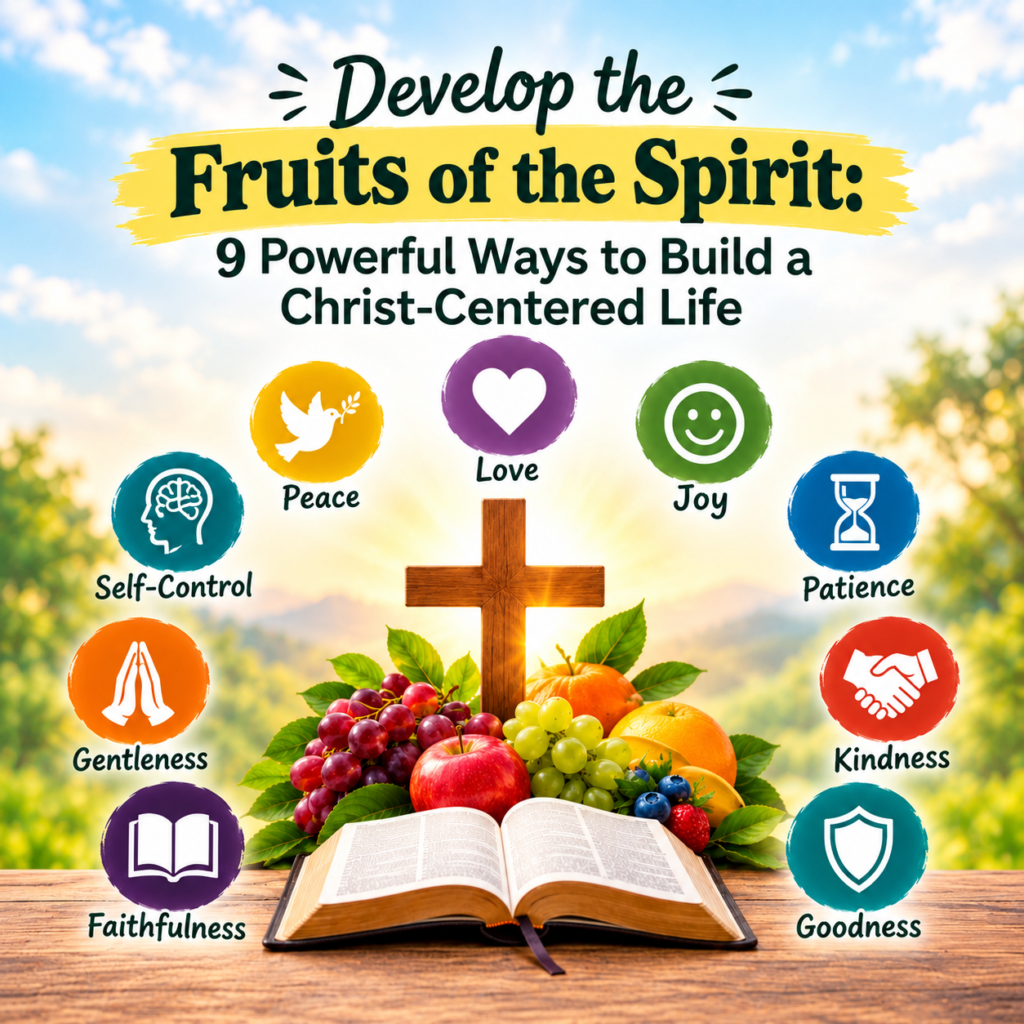
Developing the Fruits of the Spirit is about more than becoming a kinder person. It is about allowing God to transform the heart, shape everyday decisions, and influence how a person treats others. In a world filled with stress, conflict, competition, and uncertainty, these spiritual qualities offer a meaningful foundation for a life rooted in faith.
A person may attend church regularly, read the Bible, and pray daily while still struggling with impatience, anger, jealousy, or fear. These struggles do not automatically mean that faith is weak. Instead, they can become opportunities for spiritual growth and deeper dependence on God.
The Bible introduces the Fruits of the Spirit in Galatians 5:22–23, where the apostle Paul describes nine qualities that become evident in a life guided by the Holy Spirit: love, joy, peace, patience, kindness, goodness, faithfulness, gentleness, and self-control.
Learning to develop the Fruits of the Spirit involves understanding these qualities, practising them in ordinary situations, and allowing Scripture to guide personal growth. The goal is not perfection overnight. It is a gradual transformation that becomes visible in relationships, conversations, choices, and responses to life’s challenges.
This guide explores the meaning of all nine fruits and offers practical ways to cultivate them in everyday life.
What Are the Fruits of the Spirit?
The Fruits of the Spirit are nine Christian character qualities described in Galatians 5:22–23. They represent the kind of character that grows when a person lives in relationship with God and follows the guidance of the Holy Spirit.
Paul writes:
But the fruit of the Spirit is love, joy, peace, longsuffering, gentleness, goodness, faith, meekness, temperance: against such there is no law.
— Galatians 5:22–23, King James Version
Other Bible translations use terms such as patience, kindness, faithfulness, gentleness, and self-control. Although the wording varies slightly, the central message remains consistent.
The passage contrasts the Spirit’s fruit with the destructive behaviours Paul describes earlier in Galatians 5. It encourages believers to move beyond selfish desires and cultivate a life shaped by God’s character.
The word fruit is significant. Fruit develops over time as a plant grows under suitable conditions. Similarly, spiritual character develops through faith, obedience, prayer, reflection, and everyday choices.
Developing the Fruits of the Spirit does not mean pretending to be happy all the time or never experiencing anger. It means learning to respond to emotions and circumstances in ways that reflect Christian values.
Why Is It Important to Develop the Fruits of the Spirit?
Spiritual growth affects more than a person’s private relationship with God. It influences family life, friendships, workplaces, communities, and the way people respond to difficulties.
When believers cultivate spiritual character, they become better equipped to handle disagreements without cruelty, face disappointment without losing hope, and treat others with dignity even when differences arise.
There are several important reasons to pursue this growth.
1. It strengthens a person’s relationship with God
Prayer, Bible study, worship, and obedience help believers remain attentive to God’s guidance. These practices create space for self-examination and spiritual maturity.
2. It improves relationships
Love, patience, kindness, and gentleness can reduce unnecessary conflict. They encourage people to listen carefully, speak respectfully, and recognise the feelings of others.
3. It builds emotional maturity
Self-control helps a person pause before reacting. Peace encourages trust during uncertainty, while patience helps people cope with delays and disappointment.
These qualities do not remove every difficult emotion. Instead, they help believers respond thoughtfully rather than allowing temporary feelings to control their actions.
4. It makes faith visible through actions
Christian faith is expressed through everyday behaviour, not only through words. A sincere apology, an act of generosity, or a calm response to criticism can demonstrate the practical meaning of spiritual growth.
The purpose is not to impress others with religious behaviour. It is to allow faith to shape the way life is lived.
The 9 Fruits of the Spirit and How to Develop Them


8
Each fruit represents a different aspect of Christian character. Together, they provide a practical framework for living out faith in ordinary circumstances.
1. Love: Put Others Before Selfishness
Love is the first fruit listed in Galatians 5:22, and it provides a foundation for the other qualities. Biblical love involves more than affection or warm feelings. It includes patience, sacrifice, compassion, forgiveness, and a genuine concern for another person’s well-being.
In 1 Corinthians 13:4–7, Paul describes love as patient and kind, not envious or boastful. This description shows that love is demonstrated through behaviour.
How to develop love:
- Listen carefully instead of interrupting.
- Offer help without expecting praise or repayment.
- Treat people respectfully, including those with different opinions.
- Practise forgiveness while maintaining appropriate boundaries.
- Pray for the well-being of people who are difficult to understand.
For example, a family member may make an unkind comment during a stressful conversation. A loving response does not require pretending that the comment was acceptable. It means addressing the issue honestly without deliberately humiliating the other person.
As believers develop the Fruits of the Spirit, love becomes less dependent on convenience and more evident in everyday decisions.
2. Joy: Find Hope Beyond Temporary Circumstances
Biblical joy is deeper than excitement or happiness. Happiness often depends on favourable circumstances, while spiritual joy can remain present during seasons of uncertainty, grief, or disappointment.
In John 15:11, Jesus connects His teaching with the fullness of joy. This suggests that lasting joy is rooted in relationship with Him rather than in possessions, achievements, or public approval.
How to develop joy:
- Begin the day by acknowledging something for which to be thankful.
- Spend time reading encouraging passages of Scripture.
- Celebrate other people’s successes without comparing lives.
- Participate in meaningful activities that serve others.
- Remember past experiences of God’s faithfulness during difficult seasons.
Consider someone who has worked hard for an opportunity but does not receive it. Disappointment is a natural response. Spiritual joy does not demand that the person deny the disappointment. Instead, it offers room for hope, gratitude, and trust while the person decides what to do next.
Developing joy means learning that difficult circumstances do not have to determine the entire outlook on life.
3. Peace: Trust God in the Middle of Uncertainty
Peace involves a settled trust in God, even when circumstances remain unresolved. It does not mean that a person never feels anxious or that every problem disappears after prayer.
Philippians 4:6–7 encourages believers to bring their concerns to God through prayer and thanksgiving. The passage presents prayer as a response to worry and describes the peace of God as a guard for the heart and mind.
How to develop peace:
- Take time to pray honestly about personal concerns.
- Separate what can be controlled from what cannot.
- Avoid responding immediately when emotions become intense.
- Make time for silence, reflection, and Scripture.
- Seek wise support when a problem feels overwhelming.
For instance, a student waiting for examination results may repeatedly imagine the worst possible outcome. Rather than allowing fear to dominate every thought, the student can prepare for practical next steps, pray for strength, and focus on the responsibilities of the present day.
Peace does not require certainty about tomorrow. It encourages faithfulness today.
4. Patience: Learn to Wait Without Losing Kindness
Patience is the ability to endure delays, difficulties, and frustrating situations without giving in to constant irritation or retaliation.
It is especially important in relationships because people grow at different speeds. Parents, teachers, friends, colleagues, and church members all encounter moments when patience is tested.
How to develop patience:
- Pause and take a breath before responding to frustration.
- Allow others to finish speaking.
- Remember that personal growth takes time.
- Avoid demanding immediate results from every situation.
- Practise patience with personal mistakes as well as other people’s mistakes.
Imagine a parent helping a child learn a difficult skill. Repeating the same explanation several times can be tiring, but a patient response creates a safer environment for learning.
Patience is not passive acceptance of mistreatment. A person can set boundaries, correct harmful behaviour, and make firm decisions without acting cruelly.
As believers work to develop the Fruits of the Spirit, patience teaches them to respond with wisdom instead of allowing irritation to dictate their behaviour.
5. Kindness: Make Compassion Practical
Kindness turns concern into action. It includes thoughtful words, generosity, respect, and a willingness to help when another person is struggling.
Ephesians 4:32 encourages Christians to be kind and compassionate to one another. The verse connects kindness with forgiveness, showing that compassionate behaviour involves both everyday interactions and difficult relationships.
How to develop kindness:
- Check on someone who seems lonely or overwhelmed.
- Speak respectfully to people whose work is often overlooked.
- Give encouragement without using compliments to manipulate others.
- Offer practical assistance when it is genuinely helpful.
- Correct mistakes without attacking someone’s dignity.
A simple example is welcoming a new person into a church, classroom, or workplace. Introducing oneself, explaining an unfamiliar process, or inviting the person to join a conversation can reduce feelings of isolation.
Kindness does not always require money, extensive time, or dramatic gestures. Sometimes, the most meaningful act is giving another person undivided attention.
6. Goodness: Choose What Is Right Even When It Is Difficult
Goodness involves moral integrity, generosity, and a commitment to doing what is right. It is more than appearing respectable in public. It concerns the choices a person makes when there is no applause or recognition.
In Micah 6:8, Scripture emphasises doing justice, loving mercy, and walking humbly with God. These principles help explain how goodness can influence personal conduct and relationships with others.
How to develop goodness:
- Be honest when telling the truth may be uncomfortable.
- Refuse to take credit for someone else’s work.
- Keep promises or communicate honestly when circumstances change.
- Treat people fairly, regardless of their influence or status.
- Make decisions based on Christian principles rather than convenience alone.
For example, an employee discovers an error that benefits them financially. Choosing to report the mistake may involve inconvenience, but it demonstrates integrity.
Goodness also requires discernment. Not every request should be accepted, and not every popular opinion is morally sound. A commitment to goodness involves thoughtful choices guided by Scripture, wisdom, and concern for others.
7. Faithfulness: Become Dependable in Everyday Life
Faithfulness includes trustworthiness, loyalty, perseverance, and consistency. It reflects a commitment to honouring God and fulfilling responsibilities even when enthusiasm fades.
A faithful person does not need to be perfect. Rather, that person seeks to remain dependable, acknowledge mistakes, and return to what is right after setbacks.
How to develop faithfulness:
- Establish realistic routines for prayer and Bible reading.
- Honour commitments instead of making promises carelessly.
- Complete responsibilities with care.
- Be honest when a commitment cannot be fulfilled.
- Continue doing what is right even when recognition is absent.
Consider a friend who consistently checks on someone going through a difficult season. The support may not attract public attention, but its reliability can be deeply meaningful.
Faithfulness also applies to spiritual practices. A believer may experience days when prayer feels difficult or Scripture seems challenging. Continuing to seek God during those periods can help build a more consistent spiritual life.
8. Gentleness: Practise Strength With Humility
Gentleness is often misunderstood as weakness. In Christian teaching, however, gentleness involves using strength, authority, and influence with humility and care.
A gentle person can disagree firmly, correct harmful behaviour, and protect others without relying on intimidation or unnecessary aggression.
How to develop gentleness:
- Lower the intensity of a conversation when tempers rise.
- Offer correction privately when appropriate.
- Consider another person’s feelings before choosing words.
- Admit mistakes without becoming defensive.
- Use influence to encourage rather than control.
Imagine a manager addressing an employee who has made a serious mistake. Public humiliation may create fear, but respectful correction can address the problem while preserving dignity.
Gentleness is not the same as avoiding difficult conversations. It is the ability to speak truth with care.
When believers develop the Fruits of the Spirit, gentleness helps them communicate convictions without turning every disagreement into a personal battle.
9. Self-Control: Choose Your Response Instead of Reacting
Self-control is the ability to manage impulses, desires, words, and actions according to sound values. It is particularly important when emotions are strong or temptation offers immediate satisfaction.
Proverbs 25:28 compares a person without self-control to a city whose walls have been broken down. The image highlights the vulnerability that can result when impulses are allowed to govern behaviour.
How to develop self-control:
- Pause before sending an angry message.
- Set reasonable limits on distracting activities.
- Avoid making major decisions while overwhelmed.
- Identify situations that repeatedly trigger unhealthy reactions.
- Create routines that support wise choices.
For example, someone receives a hurtful message and feels an immediate urge to respond with equally hurtful words. Taking a short break allows the person to consider the consequences and choose a more constructive response.
Self-control does not mean suppressing every emotion or never enjoying life’s pleasures. It means making deliberate choices instead of allowing temporary desires to determine long-term behaviour.
Over time, these choices can support healthier habits, stronger relationships, and greater spiritual maturity.
9 Practical Ways to Develop the Fruits of the Spirit Every Day
Understanding the nine fruits is an important beginning, but lasting growth requires consistent practice. Spiritual maturity develops through a relationship with God and through choices made in ordinary situations.
The following habits can help believers turn biblical teaching into daily action.
1. Begin Each Day With Prayer
Prayer creates an opportunity to express gratitude, acknowledge weaknesses, and ask God for guidance. Rather than praying only for problems to disappear, believers can also ask for help responding to those problems with patience, love, and wisdom.
A simple morning prayer might be:
“Lord, guide my thoughts, words, and actions today. Help me show love when I feel frustrated, patience when things move slowly, and self-control when I feel tempted to react. Shape my character according to Your will.”
The value of this practice lies in sincerity, not in using perfect words.
2. Read Scripture With a Practical Purpose
Bible reading becomes more meaningful when it influences daily decisions. Instead of reading a passage quickly and moving on, readers can consider what it teaches about character and relationships.
For example, after reading Galatians 5:22–23, a person might ask:
- Which fruit do I find easiest to practise?
- Which quality becomes difficult under pressure?
- What is one action I can take to grow in that area today?
These questions connect biblical understanding with personal reflection.
3. Identify Personal Triggers
Everyone has situations that make certain qualities harder to practise. Traffic may test patience, criticism may challenge gentleness, and disappointment may affect joy.
Recognising these patterns helps a person prepare for difficult moments.
A simple approach is to identify the trigger, notice the usual reaction, and choose a healthier response in advance. This practice can make it easier to act according to faith rather than habit.
4. Practise Gratitude
Gratitude can help people notice goodness even when life feels difficult. It does not require ignoring pain or pretending that every situation is positive.
At the end of each day, a person can write down three things worth appreciating. These might include supportive relationships, an opportunity to learn, or the strength to handle a challenging conversation.
Over time, gratitude can encourage a more hopeful and balanced perspective.
5. Choose One Fruit to Focus on Each Week
Trying to improve every area of character simultaneously may feel overwhelming. Focusing on one quality at a time creates a manageable starting point.
For example, a person working on patience might practise listening without interrupting for one week. The following week, the focus could shift to kindness through intentional acts of service.
All nine qualities remain connected, but a specific focus makes progress easier to recognise.
6. Build Accountability Through Healthy Relationships
Trusted friends, mentors, and mature members of a faith community can offer encouragement and honest feedback. They may notice patterns that a person struggles to recognise independently.
Accountability should involve support rather than shame. The purpose is to encourage growth, not to make people feel spiritually inferior.
7. Reflect on Mistakes Without Giving Up
Spiritual growth includes moments of failure. A person may lose patience, speak harshly, or act selfishly despite sincerely wanting to change.
Instead of treating every mistake as proof of failure, the person can acknowledge the behaviour, apologise where appropriate, seek forgiveness, and consider how to respond differently next time.
Honest reflection turns mistakes into opportunities for learning.
8. Serve Others Quietly
Acts of service help believers practise love, kindness, goodness, and humility. These acts might include helping a neighbour, supporting a struggling friend, volunteering, or completing an unrecognised responsibility.
Service is especially valuable when it is offered without expecting praise. It encourages attention to other people’s needs rather than constant focus on personal recognition.
9. Review Progress at the End of the Day
A brief evening reflection can help turn intentions into consistent habits.
Consider these questions:
- Did I respond to others with kindness today?
- When did I struggle with self-control?
- Was I patient when circumstances became frustrating?
- What could I handle differently tomorrow?
- Where did I notice an opportunity to express my faith through action?
This review should encourage honest learning rather than harsh self-judgment.
A Simple 7-Day Plan to Develop the Fruits of the Spirit
A short plan can make spiritual growth feel more practical and achievable.
Day 1
Love and kindness
Perform one thoughtful act without expecting anything in return.
Day 2
Joy and gratitude
Write down three things you appreciate and thank God for them.
Day 3
Peace
Spend a few quiet minutes praying about a concern you cannot fully control.
Day 4
Patience
Practise listening carefully and avoiding unnecessary interruptions.
Day 5
Goodness and faithfulness
Fulfil a responsibility honestly, even if nobody notices.
Day 6
Gentleness
Handle a disagreement with respect rather than hostility.
Day 7
Self-control and reflection
Pause before reacting to a frustration and review the week’s lessons.
This plan is a starting point, not a spiritual test. Some days will be easier than others, and the same qualities may need attention repeatedly. The aim is steady growth rather than perfect performance.
Common Mistakes When Developing the Fruits of the Spirit
Even sincere believers can misunderstand what spiritual growth involves. Two common misconceptions are worth addressing.
Mistake 1: Expecting Instant Transformation
Some people assume that a strong faith experience should immediately remove every negative habit. When impatience, anger, or jealousy returns, they may conclude that they have made no progress.
However, Christian spiritual formation is often a gradual process. Prayer, Scripture, community, repentance, and daily choices can all contribute to growth over time.
A setback does not make continued effort pointless. What matters is recognising the problem and responding with honesty and a willingness to change.
Mistake 2: Confusing Spiritual Qualities With Weak Boundaries
Love does not require accepting abuse. Patience does not mean tolerating every harmful behaviour, and gentleness does not require remaining silent when someone is being mistreated.
Healthy Christian character can include firm boundaries, accountability, and difficult decisions.
A person may forgive someone while still limiting contact, seeking help, or reporting harmful conduct. The fruits should support wise and compassionate behaviour, not become excuses for allowing harm to continue.
Read more; 9 Powerful Signs of the Holy Spirit: How to Recognize God’s Presence in Everyday Life
Frequently Asked Questions
1. What are the 9 Fruits of the Spirit?
The nine Fruits of the Spirit in Galatians 5:22–23 are love, joy, peace, patience, kindness, goodness, faithfulness, gentleness, and self-control. They describe qualities associated with a life guided by the Holy Spirit.
2. How can someone develop the Fruits of the Spirit?
A believer can develop these qualities through prayer, Scripture reading, obedience to God, self-reflection, service, and consistent practice. Applying biblical principles during everyday challenges helps spiritual growth become visible in behaviour.
3. How long does it take to develop the Fruits of the Spirit?
There is no fixed timeline. Spiritual growth differs from person to person and often continues throughout life. Consistent effort, honest reflection, and dependence on God can support gradual development.
4. Can the Fruits of the Spirit grow during difficult times?
Yes. Difficult circumstances can provide opportunities to practise patience, peace, faithfulness, and self-control. However, suffering does not automatically produce spiritual maturity; the way a person responds and the support they receive also matter.
5. What is the difference between the Gifts of the Spirit and the Fruits of the Spirit?
In Christian teaching, spiritual gifts are abilities given for service and the building up of the church, as discussed in passages such as 1 Corinthians 12. The Fruits of the Spirit describe qualities of Christian character. Gifts concern how believers serve, while fruit concerns the character reflected in their lives.
6. Which Fruit of the Spirit is the most important?
Galatians 5:22–23 presents the qualities together as the fruit of the Spirit. Love also receives particular emphasis elsewhere in the New Testament, including 1 Corinthians 13. Rather than treating one quality as a replacement for the others, believers can seek growth in all nine.
Conclusion: Let Spiritual Growth Begin With Small Choices
Developing the Fruits of the Spirit is a lifelong journey of faith, reflection, and transformation. Love, joy, peace, patience, kindness, goodness, faithfulness, gentleness, and self-control provide a practical picture of Christian character.
These qualities become meaningful through everyday decisions: responding calmly instead of angrily, helping someone without expecting recognition, telling the truth when it is uncomfortable, and choosing patience when circumstances do not unfold as expected.
No one practises every quality perfectly. Spiritual maturity involves recognising weaknesses, returning to God, learning from mistakes, and continuing to grow.
The most useful starting point is simple: choose one fruit that needs attention, pray for guidance, and put that quality into practice today. Small, consistent choices can help make Christian faith more visible in relationships and daily life.
Take action today: Read Galatians 5:22–23, reflect on the quality you most want to develop, and choose one practical way to demonstrate it. Share your reflections with a trusted friend or faith community member to encourage continued growth.