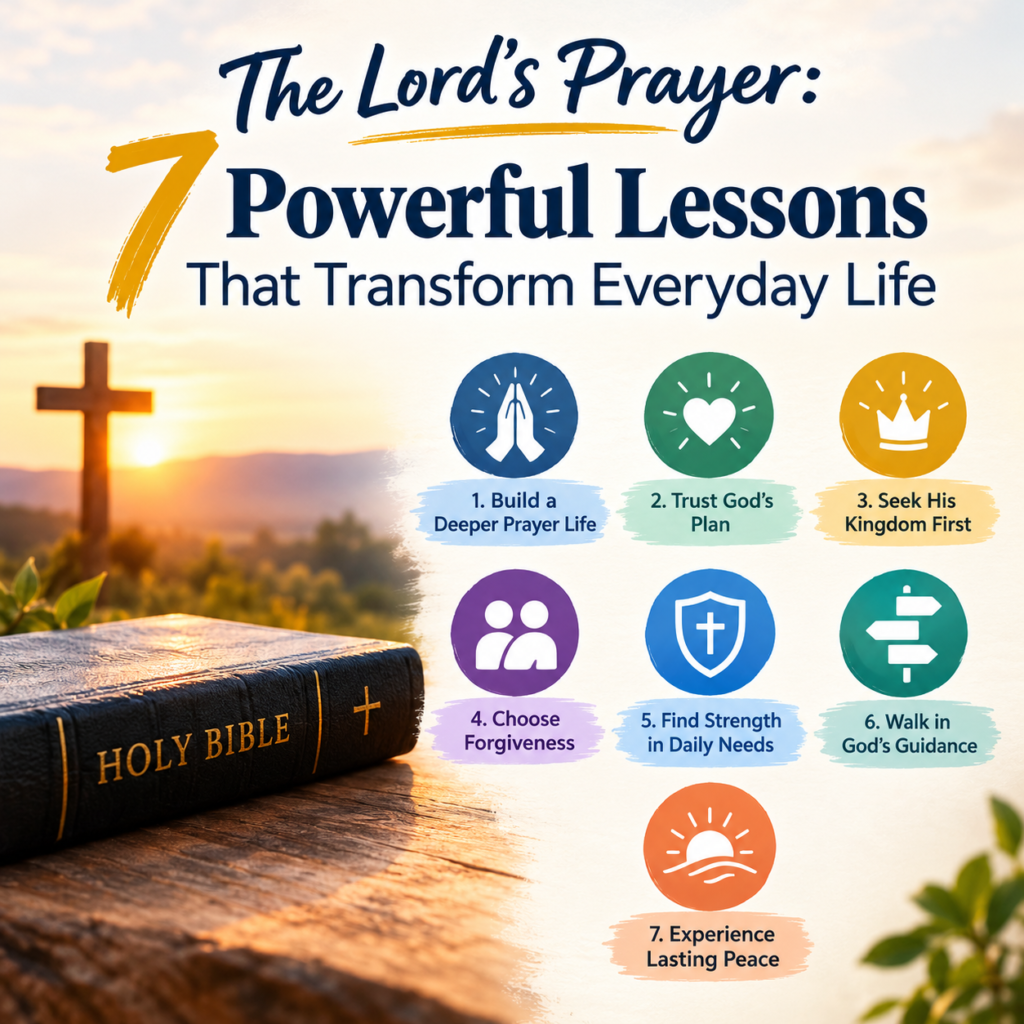
The Lord’s Prayer is one of the most recognized prayers in Christianity, yet its meaning goes far beyond memorizing familiar words. It offers a practical guide to faith, forgiveness, humility, gratitude, and the daily choices that shape a person’s life.
For millions of Christians, this prayer provides comfort during difficult times and direction when life feels uncertain. It is spoken in churches, taught to children, shared during family worship, and recited privately in moments of reflection.
Understanding the Lord’s Prayer can help believers connect its traditional language with everyday experiences. Each line reveals something important about God, human relationships, personal responsibility, and the pursuit of a more faithful life.
This guide explores the prayer’s biblical origins, explains its meaning line by line, and shares seven powerful lessons that readers can apply in their daily routines.
What Is the Lord’s Prayer?
The Lord’s Prayer is a Christian prayer that Jesus taught His disciples when they asked Him how to pray. It appears in two places in the New Testament: Matthew 6:9–13 and Luke 11:2–4.
The version in Matthew appears within the Sermon on the Mount, where Jesus teaches about sincere prayer, generosity, humility, and devotion to God. In Luke, the prayer follows a disciple’s request for Jesus to teach them to pray.
Christians commonly call it the Lord’s Prayer because Jesus provided it as a model for His followers. It is also known as the Our Father because of its opening words in many traditional translations.
The prayer contains several connected themes:
- Honoring God and recognizing His holiness.
- Seeking the fulfillment of His kingdom and will.
- Asking for daily provision.
- Receiving and extending forgiveness.
- Seeking protection from temptation and evil.
Rather than presenting prayer as a complicated religious performance, Jesus offers a simple structure that places God, human needs, and moral responsibility together.
The Lord’s Prayer in the King James Version
The following is the traditional wording of the Lord’s Prayer from Matthew 6:9–13 in the King James Version (KJV):
Our Father which art in heaven, Hallowed be thy name.
Thy kingdom come. Thy will be done in earth, as it is in heaven.
Give us this day our daily bread.
And forgive us our debts, as we forgive our debtors.
And lead us not into temptation, but deliver us from evil: For thine is the kingdom, and the power, and the glory, for ever. Amen.
The final sentence beginning “For thine is the kingdom” appears in many traditional Christian worship settings. However, it is absent from the main text of some modern Bible translations of Matthew because of differences among ancient manuscripts.
Luke’s version is shorter than Matthew’s. Churches also use different traditional forms, including versions that say “trespasses” instead of “debts.”
These differences do not change the prayer’s central message. They reflect different biblical passages, translation choices, and worship traditions.
The Biblical Meaning of the Lord’s Prayer
To understand the Lord’s Prayer fully, it helps to consider the meaning of each phrase rather than simply repeating the words.
1. “Our Father Which Art in Heaven”
The opening words establish a relationship between believers and God. Calling God “Father” expresses trust, care, belonging, and the belief that people can approach Him through prayer.
The word “our” is equally important. Jesus does not teach His disciples to pray only for their individual concerns. The prayer begins with a shared relationship that connects believers to one another.
This opening also reflects the Christian understanding that God is greater than the limitations of human life. The phrase “in heaven” points toward His divine authority and the spiritual reality of His kingdom.
Practical lesson: Prayer can begin with trust rather than fear. A person facing uncertainty may start by acknowledging God’s presence before asking for a solution.
2. “Hallowed Be Thy Name”
The word hallowed means holy, honored, or treated with deep reverence.
This phrase recognizes God’s holiness and encourages believers to approach Him with respect. It also invites reflection on how people represent their faith through their words, attitudes, and actions.
Honoring God’s name is not limited to speaking respectfully during worship. It can also involve honesty, compassion, patience, and integrity in ordinary situations.
For example, a student who refuses to cheat on an examination demonstrates honesty even when dishonesty might offer an immediate advantage.
Practical lesson: Reverence becomes meaningful when it influences behavior. Respect for God should encourage believers to treat other people with dignity.
3. “Thy Kingdom Come”
In Christianity, God’s kingdom refers to His reign, authority, and purposes. Asking for His kingdom to come expresses a desire for a world that increasingly reflects His justice, mercy, peace, and righteousness.
This request reaches beyond personal success. It directs attention toward the well-being of others and the condition of society.
A believer praying for God’s kingdom might also work to support a struggling neighbor, comfort someone experiencing grief, or stand against unfair treatment.
The phrase encourages hope without encouraging passivity. Prayer and responsible action can work together.
Practical lesson: A person can ask for a better world while taking practical steps to make their immediate surroundings more compassionate.
4. “Thy Will Be Done in Earth, as It Is in Heaven”
This line expresses surrender to God’s will. It acknowledges that human understanding is limited and that personal desires do not always align with what is right or beneficial.
Surrender does not mean that people should abandon their goals or stop making decisions. Instead, it encourages them to seek wisdom, consider their responsibilities, and remain open to correction.
Imagine someone applying for a job they strongly desire. They may pray for success while also asking for patience, wisdom, and the ability to respond constructively if the outcome differs from their expectations.
The line offers a way to hold hope and uncertainty together.
Practical lesson: Pursue meaningful goals, but remain willing to reconsider a decision when circumstances or moral responsibilities call for change.
5. “Give Us This Day Our Daily Bread”
Daily bread represents the basic necessities of life, including food, shelter, strength, and the resources needed to meet ordinary responsibilities.
The request recognizes human dependence on God while reminding believers that daily needs matter. Spiritual life does not require pretending that financial pressure, hunger, work, or family responsibilities are unimportant.
The phrase “this day” also emphasizes the present. Instead of becoming overwhelmed by every possible future problem, the prayer focuses attention on today’s needs.
For example, a family experiencing financial uncertainty might pray for provision while creating a budget, seeking available assistance, and making a realistic plan for essential expenses.
Practical lesson: Express gratitude for what is available, ask for help when necessary, and take responsible steps to meet immediate needs.
6. “And Forgive Us Our Debts, as We Forgive Our Debtors”
This part connects receiving forgiveness with extending forgiveness to others.
In Matthew’s Gospel, the word “debts” refers to moral and spiritual obligations. Some Christian traditions use “trespasses,” while others use “sins.” Each form emphasizes the need for forgiveness.
The request encourages honest self-examination. Instead of focusing exclusively on other people’s mistakes, believers are invited to recognize their own shortcomings and seek God’s mercy.
Forgiveness can also be difficult when someone has caused real harm. It does not require pretending that the harm never happened, abandoning healthy boundaries, or automatically restoring trust.
A person may choose to release the desire for revenge while still seeking justice or maintaining distance from an unsafe relationship.
Practical lesson: Acknowledge personal mistakes, apologize sincerely, and work toward forgiveness without confusing it with permission for continued harmful behavior.
7. “And Lead Us Not into Temptation, but Deliver Us from Evil”
This final petition asks for spiritual guidance and protection. It recognizes that people encounter situations in which selfishness, anger, dishonesty, fear, or harmful desires can influence their decisions.
Christians understand this request in different theological ways, but its practical emphasis is clear: people need help resisting wrongdoing and remaining faithful when facing difficulty.
Consider someone who feels tempted to spread a hurtful rumor about a colleague. Pausing, seeking wisdom, and choosing not to participate can prevent unnecessary harm.
The line also reminds believers that they do not have to face every struggle through willpower alone. Prayer can accompany support from trusted people, wise counsel, and practical changes in behavior.
Practical lesson: Identify situations that encourage harmful choices, establish healthy boundaries, and seek support before a difficult situation becomes overwhelming.
7 Powerful Lessons From the Lord’s Prayer
The prayer’s individual lines come together to form a practical framework for Christian living.
Lesson 1: Begin With Gratitude and Reverence
Many people begin prayer by listing their worries. The prayer instead opens by recognizing God’s holiness and relationship with His followers.
This change in focus can help believers approach their concerns with a more thoughtful perspective.
A person might begin by thanking God for life, family, meaningful relationships, or the strength to face a difficult day before presenting personal requests.
Gratitude does not deny suffering. It acknowledges that difficulty and appreciation can exist together.
Lesson 2: Think Beyond Personal Interests
The repeated use of “our” and “us” reminds Christians that faith includes concern for others.
The prayer invites people to consider the needs of their families, communities, and those experiencing hardship.
This principle can become practical through small acts of service, sharing resources, listening patiently, and treating people fairly.
Lesson 3: Focus on Today’s Responsibilities
The request for daily bread emphasizes present needs rather than unlimited accumulation.
Planning for the future is sensible, but constant worry about things outside one’s control can make it difficult to appreciate the present.
A useful response is to identify what requires attention today, take one reasonable step, and avoid treating every possible future problem as an immediate emergency.
Lesson 4: Practice Forgiveness With Wisdom
Forgiveness is one of the prayer’s most challenging themes because emotional wounds can remain painful long after an incident has ended.
The prayer encourages believers to resist revenge and seek freedom from destructive resentment.
However, reconciliation usually requires more than a decision to forgive. It may also require accountability, changed behavior, and restored trust over time.
Lesson 5: Align Choices With Christian Values
Asking for God’s will encourages reflection on whether decisions reflect love, honesty, humility, and responsibility.
Before making a difficult choice, a believer might ask whether the decision harms another person, violates an important responsibility, or serves only a selfish desire.
Prayer can help create space for this reflection.
Lesson 6: Seek Strength Against Temptation
The prayer recognizes that good intentions do not always make difficult decisions easy.
Someone trying to become more patient, truthful, or disciplined may need to change routines, avoid certain situations, or ask others for support.
Faith can encourage these practical efforts rather than replacing them.
Lesson 7: Let Prayer Influence Daily Behavior
The value of prayer is not limited to the moment in which the words are spoken.
Its themes can guide behavior throughout the day: gratitude at breakfast, patience during a disagreement, honesty at work, and forgiveness after a misunderstanding.
When prayer influences ordinary decisions, it becomes part of a person’s way of living rather than merely a repeated religious practice.
How to Pray the Lord’s Prayer With Understanding
The Lord’s Prayer can be used during private devotion, family worship, church services, or quiet moments of reflection.
For beginners, the following approach can make its meaning easier to understand.
- Read slowly. Avoid rushing through familiar words. Pause after each sentence and consider its meaning.
- Reflect on one theme. Choose a phrase about gratitude, forgiveness, provision, or guidance.
- Connect it with real life. Consider how that theme relates to a current challenge or responsibility.
- Make a personal request. Pray about the concern while keeping the broader message of the prayer in mind.
- Choose one practical action. Identify something that can be done that day to express the value considered.
- End with trust. Leave room for uncertainty and remember that prayer is not a guarantee of receiving every desired outcome.
For example, someone reflecting on daily bread might pray for provision, appreciate the food available at home, and consider helping a person who lacks the same resources.
Someone reflecting on forgiveness might acknowledge personal wrongdoing and decide to apologize to a friend.
These practices connect spiritual reflection with everyday responsibilities.
Common Misconceptions About the Lord’s Prayer
Is It Enough to Repeat the Words Without Understanding Them?
Memorizing the prayer can be valuable, particularly in family and community worship. However, Jesus’ teaching in Matthew 6 also warns against treating prayer as a way to impress others or relying on empty repetition.
The important distinction is not between memorized and spontaneous prayer. It is between meaningful prayer and words used without attention or sincerity.
A person can recite a traditional prayer thoughtfully, reflecting on its meaning each time.
Does Forgiveness Mean Accepting Harmful Treatment?
No. Forgiveness does not mean that abuse, dishonesty, or other wrongdoing should be ignored.
A person can seek freedom from hatred while maintaining boundaries, protecting themselves, reporting misconduct, or pursuing appropriate accountability.
Reconciliation may be possible in some situations, but it depends on circumstances, safety, and the behavior of those involved.
The prayer encourages mercy without requiring people to deny the reality of harm.
Read more: Psalm 23: 7 Powerful Lessons of Hope, Peace, and God’s Protection
Frequently Asked Questions About the Lord’s Prayer
What Is the Main Message of the Lord’s Prayer?
Its central message is that prayer involves honoring God, seeking His will, trusting Him for daily needs, extending forgiveness, and asking for guidance against evil. It brings spiritual devotion and practical responsibility together.
Where Is the Lord’s Prayer Found in the Bible?
The prayer appears in Matthew 6:9–13 and Luke 11:2–4. Matthew presents it within the Sermon on the Mount, while Luke records it after a disciple asks Jesus to teach them how to pray.
Why Do Some Versions Say “Debts” and Others Say “Trespasses”?
These differences reflect translation choices and Christian worship traditions. Matthew uses language commonly translated as “debts,” while traditional liturgical versions often use “trespasses.” Both emphasize the need for forgiveness.
Why Do Some Churches Add “For Thine Is the Kingdom”?
This doxology is included in many traditional forms of Christian worship. It is absent from the main text of Matthew 6:9–13 in several modern translations because some ancient manuscripts do not contain it in that location.
Its use varies by church tradition and Bible translation.
Can the Lord’s Prayer Be Used Every Day?
Yes. Many Christians pray it daily, whether alone, with family, or as part of a church service. Reflecting on a different phrase each day can help prevent the words from becoming automatic.
What Is the Best Way for Beginners to Learn the Lord’s Prayer?
Beginners can read the prayer from Matthew 6:9–13, learn its wording, and study the meaning of each phrase. They can then connect its themes with everyday decisions, relationships, and personal concerns.
Is the Lord’s Prayer a Request for Material Things?
It includes a request for daily bread, which represents essential needs, but the prayer is not limited to material provision. It also focuses on God’s kingdom, forgiveness, spiritual guidance, and the fulfillment of His will.