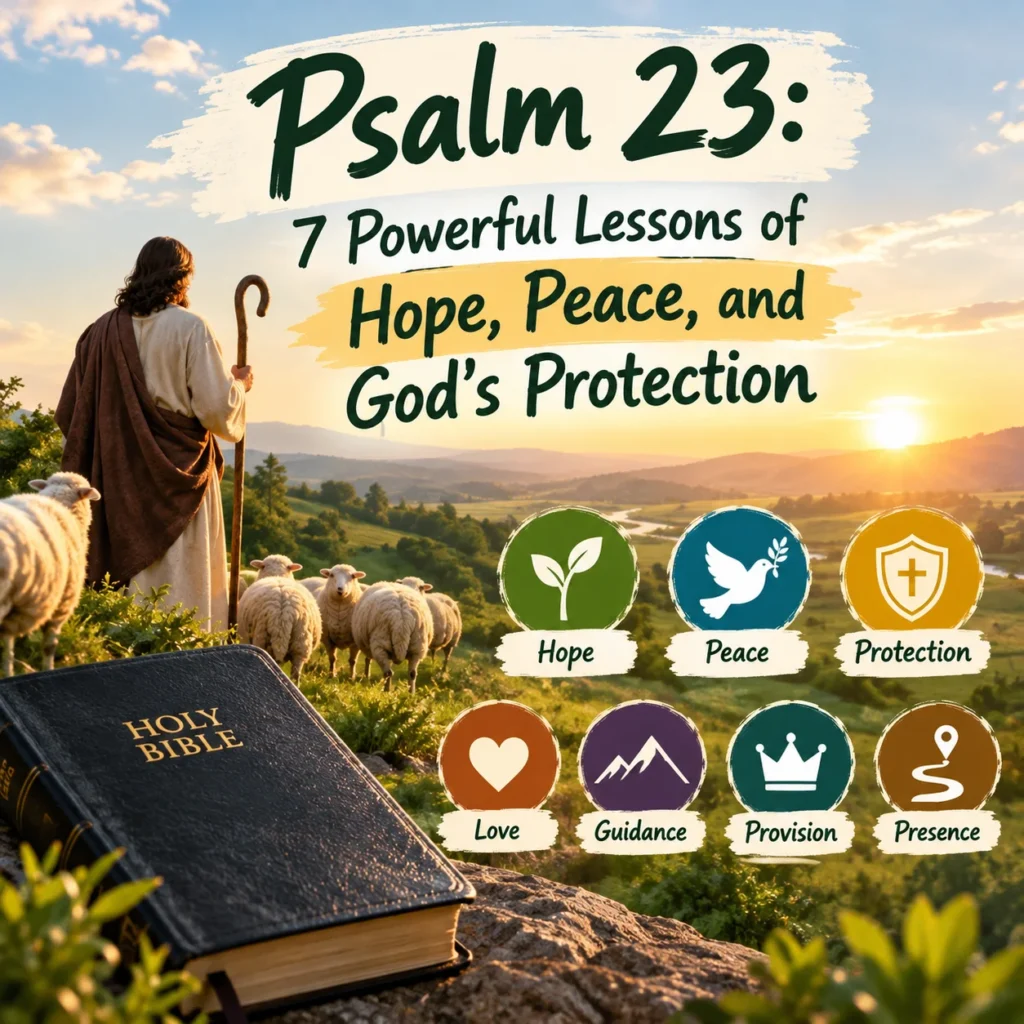
Life can become overwhelming when uncertainty, fear, and personal struggles begin to affect everyday decisions. During these moments, many people turn to the Bible for comfort, direction, and renewed hope. One of the most beloved passages for finding spiritual reassurance is Psalm 23, a short yet powerful expression of trust in God’s care.
Written as a psalm of David, this biblical passage uses the image of a shepherd caring for sheep to explain the relationship between God and His people. It speaks about provision, rest, guidance, protection, courage, and the promise of God’s presence through difficult seasons.
Psalm 23 has comforted readers across generations, cultures, and circumstances. Some people read it during morning prayer, while others turn to it during grief, illness, anxiety, or major life changes. Its message remains meaningful because it acknowledges life’s difficulties without allowing fear to become the final word.
This guide explores the meaning of Psalm 23, explains its six verses, examines its most important spiritual lessons, and offers practical ways to apply its message to modern life.
What Is Psalm 23 About?
Psalm 23 is a biblical poem traditionally attributed to David, who is described in Scripture as a shepherd before becoming king of Israel. His experience caring for sheep provides a natural background for the psalm’s central metaphor: God as a shepherd who protects, guides, and provides for His flock.
The passage contains six verses in most English Bible translations. Together, they describe a journey from provision and peaceful rest to guidance, danger, hospitality, and lasting hope.
Rather than promising a life without problems, the psalm presents a picture of confidence in God’s presence through both peaceful and difficult circumstances.
Its central message is simple: believers can place their trust in God because they are not abandoned to face life’s challenges alone.
Psalm 23: The Complete Passage and Its Meaning
The wording of Psalm 23 differs slightly among Bible translations. The following explanations use the familiar King James Version (KJV) wording for the verse quotations.
Psalm 23:1 — The Lord Is My Shepherd
“The LORD is my shepherd; I shall not want.”
The opening verse establishes the foundation of the entire psalm. David describes God as a shepherd, someone responsible for leading, feeding, and protecting vulnerable sheep.
The phrase “I shall not want” expresses confidence that God provides what is truly needed. It does not necessarily mean that believers will receive everything they desire or never experience financial difficulties.
Instead, it encourages a deeper understanding of contentment. People can pursue meaningful goals while remembering that their worth and peace do not depend entirely on possessions, professional success, or social approval.
For a person facing uncertainty about the future, this verse offers reassurance that faith can provide a steady foundation even when circumstances remain unpredictable.
Psalm 23:2 — Rest and Restoration
“He maketh me to lie down in green pastures: he leadeth me beside the still waters.”
This verse presents a peaceful picture of green fields and quiet water. Both images communicate nourishment, safety, and rest.
Sheep depend on their shepherd to guide them toward suitable places to feed and drink. Similarly, the verse portrays God as a source of spiritual nourishment and restoration.
Modern life often celebrates constant productivity. People may feel guilty when they rest, even when exhaustion affects their relationships, judgment, and emotional well-being.
The image of green pastures challenges that mindset. Rest is not necessarily wasted time; it can be an important part of living wisely and sustainably.
A practical response to this verse might involve setting aside time for prayer, taking a quiet walk, reading Scripture, or stepping away from unnecessary distractions.
These activities do not remove every problem, but they can create space for reflection and renewed perspective.
Psalm 23:3 — Guidance Along the Right Path
“He restoreth my soul: he leadeth me in the paths of righteousness for his name’s sake.”
The third verse moves from physical nourishment to inner restoration. The expression “restoreth my soul” suggests renewal, while the reference to righteous paths points toward a life guided by moral and spiritual principles.
People sometimes face decisions in which the easiest option is not the most honest or responsible one. Pressure from friends, colleagues, or family members can make these choices more complicated.
This verse encourages readers to consider whether their decisions reflect integrity, compassion, and faithfulness.
For example, an employee who discovers a mistake at work may feel tempted to hide it. Choosing to acknowledge the error and help correct it can be difficult, but it reflects a commitment to honesty.
The verse also reminds believers that spiritual guidance is not simply about reaching a desired destination. It concerns the character developed along the way.
Psalm 23:4 — Courage in the Darkest Valley
“Yea, though I walk through the valley of the shadow of death, I will fear no evil: for thou art with me; thy rod and thy staff they comfort me.”
This is one of the most widely recognized verses in Psalm 23. Its imagery acknowledges that life includes frightening experiences, painful losses, and seasons when the future seems uncertain.
The valley represents danger and vulnerability. Yet David’s confidence does not depend on pretending the valley is harmless. It comes from believing that God remains present within it.
Notice the movement in the language. Earlier verses speak about God in the third person, describing what He does. In this verse, David speaks directly to God: “thou art with me.”
That shift makes the verse feel personal and intimate. During suffering, faith can become less about abstract explanations and more about seeking the presence of God.
The rod and staff represent the shepherd’s means of protection and guidance. They remind readers that care can include both comfort and correction.
For someone experiencing grief, illness, or fear, this verse should not be treated as a guarantee that pain will disappear immediately. Its reassurance is that suffering does not have to mean spiritual abandonment.
Psalm 23:5 — A Table in the Presence of Enemies
“Thou preparest a table before me in the presence of mine enemies: thou anointest my head with oil; my cup runneth over.”
The fifth verse changes the imagery from a shepherd’s field to a welcoming table. God is presented as a host who offers hospitality, dignity, and abundance even in the presence of opposition.
The reference to enemies is important because the setting is not completely peaceful. The table is prepared while conflict or hostility remains nearby.
This suggests that inner peace does not always require every external problem to be resolved first.
A person may experience criticism at work, tension within a family, or unfair treatment in a community. Although these situations can be painful, they do not have to determine that person’s entire sense of worth.
The overflowing cup expresses abundance and gratitude. It encourages readers to recognize blessings that may otherwise be overlooked during difficult times.
This does not mean denying injustice or tolerating harmful behavior. Instead, the verse invites believers to maintain hope and dignity without allowing hostility to consume their lives.
Psalm 23:6 — Goodness, Mercy, and Lasting Hope
“Surely goodness and mercy shall follow me all the days of my life: and I will dwell in the house of the LORD for ever.”
The final verse brings the psalm to a hopeful conclusion. David looks beyond immediate needs and present dangers toward a lasting relationship with God.
The words “goodness and mercy” communicate the expectation of God’s faithful care. In many Christian interpretations, the verse also points toward the hope of eternal fellowship with God.
The promise should not be confused with a claim that every day will be easy or that faithful people will never suffer. The psalm itself acknowledges the reality of dark valleys.
Its hope is deeper than uninterrupted comfort. It encourages believers to trust in God’s faithfulness across changing circumstances.
For everyday life, the verse can inspire gratitude, patience, and a willingness to approach the future with hope rather than constant fear.
7 Powerful Lessons From Psalm 23
1. Trust God When the Future Is Uncertain
The shepherd image encourages believers to place their confidence in God’s guidance rather than relying entirely on their own ability to predict every outcome.
Trust does not mean avoiding careful planning. It means planning responsibly while recognizing that some circumstances remain beyond personal control.
2. Make Rest Part of a Healthy Spiritual Life
Green pastures and still waters remind readers that rest has spiritual significance.
A regular period of prayer, quiet reflection, or Scripture reading can help create a more intentional rhythm of life. Rest also includes recognizing personal limits and seeking appropriate support when needed.
3. Choose Integrity Over Convenience
The paths of righteousness in Psalm 23 point toward ethical living.
Honesty, fairness, patience, and compassion are practical expressions of faith. Small decisions matter because they gradually shape habits and character.
4. Remember That Hardship Is Not the Whole Story
The valley in verse four shows that difficult experiences belong to the human journey.
A painful season may influence a person’s life, but it does not have to define every part of their identity or determine their entire future.
5. Seek Courage Through God’s Presence
The verse about the darkest valley emphasizes companionship rather than isolation.
Believers may draw comfort from prayer, worship, Scripture, and supportive faith communities while also seeking practical help from trusted people when challenges become difficult to manage.
6. Practice Gratitude Without Ignoring Pain
The overflowing cup offers a picture of abundance.
Gratitude does not require pretending that problems are unimportant. It means acknowledging what remains good while working honestly through what is difficult.
7. Hold On to Hope Beyond Present Circumstances
The final verse looks toward enduring goodness, mercy, and fellowship with God.
This long-term perspective can encourage patience during disappointment and help believers make choices shaped by lasting values rather than temporary fear.
Why Psalm 23 Still Matters in Modern Life
Although Psalm 23 comes from an ancient pastoral setting, its images remain understandable in contemporary life.
People today may not depend on shepherds or livestock, but they understand the need for security, direction, rest, and companionship.
During Stress and Anxiety
The image of still waters can remind readers to pause before reacting to every demand. Quiet reflection may help them respond more thoughtfully to everyday pressures.
During Grief and Loss
The valley of the shadow of death offers language for experiences that are often difficult to explain. It can help grieving people express sorrow while holding on to spiritual hope.
During Major Life Changes
A new job, relocation, family responsibility, or educational challenge can create uncertainty. The shepherd metaphor encourages a balance of preparation, humility, and trust.
During Conflict
The table prepared in the presence of enemies reminds readers that their dignity need not depend on other people’s approval.
The passage does not require passivity in the face of mistreatment. It can instead support a response guided by courage, wisdom, and self-respect.
Common Misunderstandings About Psalm 23
Misunderstanding 1: Faith Guarantees a Problem-Free Life
Psalm 23 does not promise freedom from suffering. Its reference to the darkest valley directly acknowledges danger and fear.
The passage offers confidence in God’s presence rather than a guarantee that every difficulty will disappear.
Misunderstanding 2: “I Shall Not Want” Means Getting Everything Desired
The opening verse is about trust in God’s provision, not unlimited material success.
Readers can appreciate this distinction by asking whether a desire reflects a genuine need, a responsible goal, or simply pressure to meet other people’s expectations.
How to Apply Psalm 23 to Everyday Life
Readers can turn the psalm’s message into a simple daily practice.
- Begin with trust. Read the opening verse and identify one concern that feels difficult to control.
- Create space for rest. Spend five quiet minutes praying, reflecting, or reading Scripture without distractions.
- Choose a righteous path. Consider one decision that requires greater honesty, patience, or compassion.
- Face the valley honestly. Name a challenge instead of pretending it does not exist. Consider what practical support may help.
- Notice the overflowing cup. Write down three things for which gratitude feels genuine.
- End with hope. Reflect on one action that aligns with long-term faith and values.
This practice is not a formula for making every problem disappear. It is a way to bring the psalm’s themes of trust, rest, courage, and gratitude into ordinary routines.
Read more: 25 Powerful Names of God in the Bible and Their Beautiful Meanings
Frequently Asked Questions About Psalm 23
1. Who wrote Psalm 23?
Psalm 23 is traditionally attributed to David. Its shepherd imagery is often understood in connection with his early life as a shepherd.
2. What is the main message of Psalm 23?
Its central message is that God provides guidance, care, protection, and hope. The psalm encourages trust even when life includes uncertainty and suffering.
3. Why is Psalm 23 often read at funerals?
Its language about God’s presence in the valley of the shadow of death offers comfort to grieving families. The final verse also expresses enduring hope in God’s goodness and mercy.
4. What does “The Lord is my shepherd” mean?
The phrase presents God as a caring guide who leads and protects His people. It emphasizes dependence, trust, and the reassurance of not being spiritually abandoned.
5. What does the valley of the shadow of death represent?
It can refer to danger, suffering, grief, or periods of deep uncertainty. The image emphasizes God’s presence through hardship rather than promising that hardship will never occur.
6. How many verses are in Psalm 23?
Psalm 23 contains six verses in standard English Bible editions.
7. How can readers use Psalm 23 in daily prayer?
Readers can reflect on one verse each day, express gratitude, ask for guidance, and pray for courage during difficult circumstances. The passage can also provide a starting point for personal meditation or group Bible study.
Conclusion: Find Lasting Hope in Psalm 23
Psalm 23 offers a powerful reminder that a meaningful spiritual life includes trust, rest, guidance, courage, gratitude, and hope.
Its shepherd imagery shows a God who provides care, while its darkest valley acknowledges that suffering remains part of human experience. Together, these themes present a faith that does not depend on having a perfect life.
The passage also offers practical wisdom for modern readers: slow down when life becomes overwhelming, make choices with integrity, recognize genuine blessings, and seek support during difficult seasons.
Whether read during morning prayer, shared with a grieving loved one, or studied as part of a Bible lesson, Psalm 23 invites reflection on what it means to live with trust and purpose.
Readers can begin today by choosing one verse, reflecting on its meaning, and identifying one practical way to put its message into action.